


 Cart
Cart
 sales@molnova.com



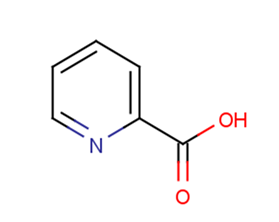
2-Picolinic acid
CAS No. 98-98-6
2-Picolinic acid( PCL 016 )
Catalog No. M19678 CAS No. 98-98-6
PCL 016 is a topical antiviral agent which inhibits adenovirus replication in rabbit.
Purity : >98% (HPLC)
 COA
Datasheet
HNMR
HPLC
MSDS
Handing Instructions
COA
Datasheet
HNMR
HPLC
MSDS
Handing Instructions
| Size | Price / USD | Stock | Quantity |
| 1 mL x 10 mM in DMSO | 28 | In Stock |


|
| 100MG | Get Quote | In Stock |
|
| 200MG | Get Quote | In Stock |
|
| 500MG | 37 | In Stock |
|
| 1G | Get Quote | In Stock |
|
Biological Information
-
Product Name2-Picolinic acid
-
NoteResearch use only, not for human use.
-
Brief DescriptionPCL 016 is a topical antiviral agent which inhibits adenovirus replication in rabbit.
-
DescriptionPCL 016 is a topical antiviral agent which inhibits adenovirus replication in rabbit.(In Vivo):Topical 1.5% PCL, 0.8% PCL, 0.369% PCL (pH7), 0.369% PCL (pH4) and 0.5% CDV are significantly more effective than the Control in reducing Ad Positive Cultures/Total (Days 1-14) and the Duration of Ad Shedding in the Ad5/NZW rabbit ocular model. Although not statistically significant, there appears to be a trend toward concentration-dependent efficacy of Picolinic acid on the Duration of Ad Shedding. There is no apparent ocular toxicity associated with Picolinic acid concentrations.
-
In Vitro——
-
In VivoTopical 1.5% PCL, 0.8% PCL, 0.369% PCL (pH7), 0.369% PCL (pH4) and 0.5% CDV are significantly more effective than the Control in reducing Ad Positive Cultures/Total (Days 1-14) and the Duration of Ad Shedding in the Ad5/NZW rabbit ocular model. Although not statistically significant, there appears to be a trend toward concentration-dependent efficacy of Picolinic acid on the Duration of Ad Shedding. There is no apparent ocular toxicity associated with Picolinic acid concentrations.
-
SynonymsPCL 016
-
PathwayProteasome/Ubiquitin
-
TargetEndogenous Metabolite
-
RecptorEndogenous Metabolite
-
Research AreaEndocrinology
-
IndicationAcne
Chemical Information
-
CAS Number98-98-6
-
Formula Weight123.11
-
Molecular FormulaC6H5NO2
-
Purity>98% (HPLC)
-
SolubilityDMSO:10 mM;Water:50 mg/mL
-
SMILESOC(=O)c1ccccn1
-
Chemical Name2-Pyridinecarboxylic acid
Shipping & Storage Information
-
Storage(-20℃)
-
ShippingWith Ice Pack
-
Stability≥ 2 years
Reference
1.Sreekumar A Poisson L M Rajendiran T M et al. Metabolomic profiles delineate potential role for sarcosine in prostate cancer progression.[J]. Nature 2009 457(7231):910-914.
molnova catalog



related products
-
Sulcatone
6-Methyl-5-hepten-2-one is an alarm/panic pheromone produce by ant species.
-
3-Nitro-L-tyrosine
3-Nitrotyrosine is the major product from the spontaneous reaction of peroxynitrite with tyrosine. Formation of nitrotyrosine can indicate the formation of peroxynitrite by a nitric oxide (NO)-dependent oxidative damage.
-
3-Hydroxyglutaric ac...
3-Hydroxyglutaric acid is one of several metabolites produced when insufficient levels of GCDH are available. It is used as a biomarker of GCDH deficiency.
