


 Cart
Cart
 sales@molnova.com



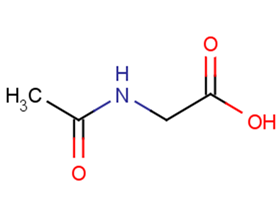
N-Acetylglycine
CAS No. 543-24-8
N-Acetylglycine( Aceturic acid | Acetamidoacetic acid )
Catalog No. M19625 CAS No. 543-24-8
N-Acetylglycine is a minor constituent of numerous foods with no genotoxicity or acute toxicity. N-acetylglycine is used in biological research of peptidomimetics.
Purity : >98% (HPLC)
 COA
Datasheet
HNMR
HPLC
MSDS
Handing Instructions
COA
Datasheet
HNMR
HPLC
MSDS
Handing Instructions
| Size | Price / USD | Stock | Quantity |
| 1 mL x 10 mM in DMSO | 28 | In Stock |


|
| 100MG | Get Quote | In Stock |
|
| 200MG | Get Quote | In Stock |
|
| 500MG | 37 | In Stock |
|
| 1G | Get Quote | In Stock |
|
Biological Information
-
Product NameN-Acetylglycine
-
NoteResearch use only, not for human use.
-
Brief DescriptionN-Acetylglycine is a minor constituent of numerous foods with no genotoxicity or acute toxicity. N-acetylglycine is used in biological research of peptidomimetics.
-
DescriptionN-Acetylglycine is a minor constituent of numerous foods with no genotoxicity or acute toxicity. N-acetylglycine is used in biological research of peptidomimetics.
-
In Vitro——
-
In Vivo——
-
SynonymsAceturic acid | Acetamidoacetic acid
-
PathwayOthers
-
TargetOther Targets
-
RecptorOthers
-
Research Area——
-
Indication——
Chemical Information
-
CAS Number543-24-8
-
Formula Weight117.1
-
Molecular FormulaC4H7NO3
-
Purity>98% (HPLC)
-
SolubilityDMSO: 10 mM;Water: 27 mg/mL
-
SMILESCC(=O)NCC(O)=O
-
Chemical NameGlycine N-acetyl-
Shipping & Storage Information
-
Storage(-20℃)
-
ShippingWith Ice Pack
-
Stability≥ 2 years
Reference
1.Harper MS et al. Toxicology studies with N-acetylglycine. Food Chem Toxicol. 2010 May;48(5):1321-7.
molnova catalog



related products
-
Senecivernine
Senecivernine is a natural product of Senecio, Asteraceae. Senecivernine can be used as a reference standard.
-
Ornidazole
Ornidazole(Ro 7-0207) is a 5-nitroimidazole derivative with antiprotozoal and antibacterial properties against anaerobic bacteria.
-
3-Methylnonan-1-ol
3-Methylnonan-1-ol is a part of perfume and can enhance the aroma of perfume.
