


 Cart
Cart
 sales@molnova.com



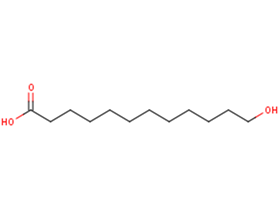
12-Hydroxydodecanoic acid
CAS No. 505-95-3
12-Hydroxydodecanoic acid( 12-hydroxylauric acid )
Catalog No. M19613 CAS No. 505-95-3
12-hydroxydodecanoic acid is the substrate of the human glutathione-dependent formaldehyde dehydrogenase.
Purity : >98% (HPLC)
 COA
Datasheet
HNMR
HPLC
MSDS
Handing Instructions
COA
Datasheet
HNMR
HPLC
MSDS
Handing Instructions
| Size | Price / USD | Stock | Quantity |
| 1 mL x 10 mM in DMSO | 33 | In Stock |


|
| 50MG | 31 | In Stock |
|
| 100MG | 44 | In Stock |
|
| 200MG | 63 | In Stock |
|
| 500MG | Get Quote | In Stock |
|
| 1G | Get Quote | In Stock |
|
Biological Information
-
Product Name12-Hydroxydodecanoic acid
-
NoteResearch use only, not for human use.
-
Brief Description12-hydroxydodecanoic acid is the substrate of the human glutathione-dependent formaldehyde dehydrogenase.
-
Description12-hydroxydodecanoic acid is the substrate of the human glutathione-dependent formaldehyde dehydrogenase.
-
In Vitro——
-
In Vivo——
-
Synonyms12-hydroxylauric acid
-
PathwayOthers
-
TargetOther Targets
-
RecptorOthers
-
Research Area——
-
Indication——
Chemical Information
-
CAS Number505-95-3
-
Formula Weight216.32
-
Molecular FormulaC12H24O3
-
Purity>98% (HPLC)
-
SolubilityDMSO:10 mM
-
SMILESOCCCCCCCCCCCC(O)=O
-
Chemical Name——
Shipping & Storage Information
-
Storage(-20℃)
-
ShippingWith Ice Pack
-
Stability≥ 2 years
Reference
1.Sanghani PC et al. Human glutathione-dependent formaldehyde dehydrogenase. Structures of apo binary and inhibitory ternary complexes. Biochemistry. 2002 Sep 3;41(35):10778-86.
molnova catalog



related products
-
Isovitexin 7-O-rutin...
Isovitexin 7-O-rutinoside is an anti-inflammatory agent that can be isolated from the Mongolian anti-hepatic plant Dianthus versicolor.
-
hRIO2 kinase ligand-...
hRIO2 kinase ligand-1 is a potent ligand for hRIO2 kinase (Kd: 520 nM).
-
[Gln4] Neurotensin
[Gln4] Neurotensin
