


 Cart
Cart
 sales@molnova.com



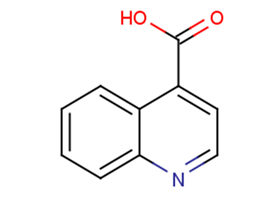
4-Quinolinecarboxylic acid
CAS No. 486-74-8
4-Quinolinecarboxylic acid( QUINOLINE-4-CARBOXYLIC ACID )
Catalog No. M19607 CAS No. 486-74-8
4-Quinolinecarboxylic acid showed anti-tumor activity against L1210 leukemia and B16 melanoma.
Purity : >98% (HPLC)
 COA
Datasheet
HNMR
HPLC
MSDS
Handing Instructions
COA
Datasheet
HNMR
HPLC
MSDS
Handing Instructions
| Size | Price / USD | Stock | Quantity |
| 1 mL x 10 mM in DMSO | 28 | In Stock |


|
| 100MG | Get Quote | In Stock |
|
| 200MG | 27 | In Stock |
|
| 500MG | Get Quote | In Stock |
|
| 1G | Get Quote | In Stock |
|
Biological Information
-
Product Name4-Quinolinecarboxylic acid
-
NoteResearch use only, not for human use.
-
Brief Description4-Quinolinecarboxylic acid showed anti-tumor activity against L1210 leukemia and B16 melanoma.
-
Description4-Quinolinecarboxylic acid showed anti-tumor activity against L1210 leukemia and B16 melanoma.
-
In Vitro——
-
In Vivo——
-
SynonymsQUINOLINE-4-CARBOXYLIC ACID
-
PathwayOthers
-
TargetOther Targets
-
RecptorOthers
-
Research Area——
-
Indication——
Chemical Information
-
CAS Number486-74-8
-
Formula Weight173.17
-
Molecular FormulaC10H7NO2
-
Purity>98% (HPLC)
-
SolubilityDMSO:196.3 mM
-
SMILESOC(=O)c1ccnc2ccccc12
-
Chemical Name——
Shipping & Storage Information
-
Storage(-20℃)
-
ShippingWith Ice Pack
-
Stability≥ 2 years
Reference
1.Dexter DL et al. Activity of a novel 4-quinolinecarboxylic acid NSC 368390 [6-fluoro-2-(2'-fluoro-11'-biphenyl-4-yl)-3-methyl-4-quinolinecarb oxylic acid sodium salt] against experimental tumors. Cancer Res. 1985 Nov;45(11 Pt 1):5563-8.
molnova catalog



related products
-
Eupatorin-5-methylet...
Eupatorin-5-methylether is a natural product for research related to life sciences.
-
Martynoside
Martynoside is a natural selective estrogen receptor modulator, which has antioxidative, anti-muscle fatigue, anticancer and antimetastatic activities.
-
pTH (70-84) (human)
pTH (70-84) (human)
