


 Cart
Cart
 sales@molnova.com



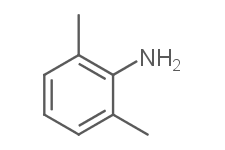
26-Dimethylaniline
CAS No. 87-62-7
26-Dimethylaniline( —— )
Catalog No. M19499 CAS No. 87-62-7
26-Xylidine is an aniline derivative with the chemical formula (CH3)2C6H3NH2. It is an isomer of 24-xylidine and 34-xylidine. It is a colourless liquid although commercial samples can appear to be yellow or even red.
Purity : >98% (HPLC)
 COA
Datasheet
HNMR
HPLC
MSDS
Handing Instructions
COA
Datasheet
HNMR
HPLC
MSDS
Handing Instructions
| Size | Price / USD | Stock | Quantity |
| 100MG | Get Quote | Get Quote |


|
| 200MG | Get Quote | Get Quote |
|
| 500MG | Get Quote | Get Quote |
|
| 1G | Get Quote | Get Quote |
|
Biological Information
-
Product Name26-Dimethylaniline
-
NoteResearch use only, not for human use.
-
Brief Description26-Xylidine is an aniline derivative with the chemical formula (CH3)2C6H3NH2. It is an isomer of 24-xylidine and 34-xylidine. It is a colourless liquid although commercial samples can appear to be yellow or even red.
-
Description26-Xylidine is an aniline derivative with the chemical formula (CH3)2C6H3NH2. It is an isomer of 24-xylidine and 34-xylidine. It is a colourless liquid although commercial samples can appear to be yellow or even red.
-
In Vitro——
-
In Vivo——
-
Synonyms——
-
PathwayOthers
-
TargetOther Targets
-
RecptorOthers
-
Research Area——
-
Indication——
Chemical Information
-
CAS Number87-62-7
-
Formula Weight121.18
-
Molecular FormulaC8H11N
-
Purity>98% (HPLC)
-
SolubilityDMSO:10 mM
-
SMILESCC1=CC=CC(C)=C1N
-
Chemical Name——
Shipping & Storage Information
-
Storage(-20℃)
-
ShippingWith Ice Pack
-
Stability≥ 2 years
Reference
1.Zheng X et al. J Food Sci. 2013 Jun; 78(6):T955-9.
molnova catalog



related products
-
Cyclo(Pro-Val)
Cyclo(Pro-Val) shows cyctoxic, moderate antifungal and weak antitumor activities in vitro, it can inhibit the growth of Bacillus subtilis with the minimal inhibitory concentration (MIC) value of 0.8 g/L. Cyclo(Pro-Val) and cyclo(Pro-Tyr) are toxic to both suspension cells and seedlings of Pinus thunbergii, which may offer some clues to research the mechanism of pine wilt disease caused by pine wood nematode.
-
Triptophenolide
Triptophenolide is a compound isolated from?Tripterygium wilfordii Hook with anti-inflammatory activity.
-
Heptasaccharide
Heptasaccharide Glc4Xyl3, a covalent inhibitor of endo-xyloglucanases, is used for the identification and analysis of diverse xyloglucan-active enzymes in nature.
