


 Cart
Cart
 sales@molnova.com



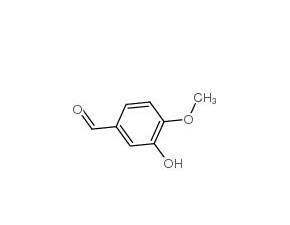
Isovanillin
CAS No. 621-59-0
Isovanillin( —— )
Catalog No. M19366 CAS No. 621-59-0
Isovanillin is an aldehyde oxidase inhibitor. Antispasmodic activities. Antidiarrheal activities.
Purity : >98% (HPLC)
 COA
Datasheet
HNMR
HPLC
MSDS
Handing Instructions
COA
Datasheet
HNMR
HPLC
MSDS
Handing Instructions
| Size | Price / USD | Stock | Quantity |
| 100MG | Get Quote | In Stock |


|
| 200MG | Get Quote | In Stock |
|
| 500MG | Get Quote | In Stock |
|
| 1G | 27 | In Stock |
|
Biological Information
-
Product NameIsovanillin
-
NoteResearch use only, not for human use.
-
Brief DescriptionIsovanillin is an aldehyde oxidase inhibitor. Antispasmodic activities. Antidiarrheal activities.
-
DescriptionIsovanillin is an aldehyde oxidase inhibitor. Antispasmodic activities. Antidiarrheal activities.
-
In VitroIsovanillin is not a substrate for aldehyde oxidase and therefore it is metabolized to isovanillic acid predominantly by aldehyde dehydrogenase.Isovanillin is relaxant of ileum contractions induced by 5-HT (IC50=356±50μM) .
-
In VivoIsovanillin (2 mg/kg & 5 mg/kg) and iso-acetovanillon (2 mg/kg & 5 mg/kg) both have antidiarrheal and anti-motility effect on gastrointestinal tract.
-
Synonyms——
-
PathwayOthers
-
TargetOther Targets
-
RecptorOthers
-
Research AreaOthers-Field
-
Indication——
Chemical Information
-
CAS Number621-59-0
-
Formula Weight152.15
-
Molecular FormulaC8H8O3
-
Purity>98% (HPLC)
-
SolubilityIn Vitro:?DMSO : 100 mg/mL (657.25 mM)
-
SMILESCOC1=C(C=C(C=C1)C=O)O
-
Chemical Name——
Shipping & Storage Information
-
Storage(-20℃)
-
ShippingWith Ice Pack
-
Stability≥ 2 years
Reference
molnova catalog



related products
-
24-epi-24-O-acetyl-7...
The roots of Cimicifuga foetida L.
-
Leteprinim
Leteprinim is an hypoxanthine derivative that stimulates in vitro neurite outgrowth and the production of adenosine and neurotrophins from astrocytes.
-
WRW4 TFA(878557-55-2...
Selective antagonist of formyl peptide receptor 2 (FPR2) signaling. Inhibits WKYMVm binding to FPR2 (IC50 = 0.23 μM) and inhibits intracellular calcium release induced by WKYMVm, MMK 1, amyloid β42, and F peptide. Also inhibits FPR2-mediated signaling in human neutrophils; blocks chemotactic migration and superoxide generation by amyloid β42 peptide.
