


 Cart
Cart
 sales@molnova.com



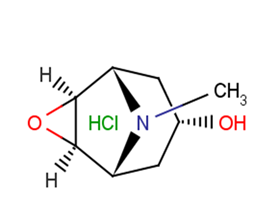
Scopine HCl
CAS No. 85700-55-6
Scopine HCl( 6,7-Epoxytropine hydrochloride )
Catalog No. M19184 CAS No. 85700-55-6
Scopine HCl salt is the metabolite of anisodine, which is a α1-adrenergic receptor agonist and used in the treatment of acute circulatory shock.
Purity : >98% (HPLC)
 COA
Datasheet
HNMR
HPLC
MSDS
Handing Instructions
COA
Datasheet
HNMR
HPLC
MSDS
Handing Instructions
| Size | Price / USD | Stock | Quantity |
| 1 mL x 10 mM in DMSO | 43 | Get Quote |


|
| 2MG | 29 | Get Quote |
|
| 5MG | 42 | Get Quote |
|
| 10MG | 58 | Get Quote |
|
| 25MG | 93 | Get Quote |
|
| 50MG | 129 | Get Quote |
|
| 100MG | 184 | Get Quote |
|
| 200MG | Get Quote | Get Quote |
|
| 500MG | Get Quote | Get Quote |
|
| 1G | Get Quote | Get Quote |
|
Biological Information
-
Product NameScopine HCl
-
NoteResearch use only, not for human use.
-
Brief DescriptionScopine HCl salt is the metabolite of anisodine, which is a α1-adrenergic receptor agonist and used in the treatment of acute circulatory shock.
-
DescriptionScopine HCl salt is the metabolite of anisodine, which is a α1-adrenergic receptor agonist and used in the treatment of acute circulatory shock.
-
In Vitro——
-
In Vivo——
-
Synonyms6,7-Epoxytropine hydrochloride
-
PathwayOthers
-
TargetOther Targets
-
Recptorα1-adrenergic receptor
-
Research AreaNeurological Disease
-
Indication——
Chemical Information
-
CAS Number85700-55-6
-
Formula Weight191.66
-
Molecular FormulaC8H13NO2·HCl
-
Purity>98% (HPLC)
-
SolubilityDMSO : 15 mg/mL 78.26 mM
-
SMILESCN1[C@@H]2CC(C[C@H]1[C@H]3[C@@H]2O3)O.Cl
-
Chemical Name——
Shipping & Storage Information
-
Storage(-20℃)
-
ShippingWith Ice Pack
-
Stability≥ 2 years
Reference
molnova catalog



related products
-
Orn8, Urotensin II, ...
[Orn8]-Urotensin II (human), a peptide analog of urotensin II, is a UT receptor agonist. [Orn8]-Urotensin II (human) increases intracellular calcium levels in HEK293.
-
Sarafloxacin hydroch...
Sarafloxacin hydrochloride is a hydrochloride salt form of sarafloxacin which is a quinolone antibiotic drug.
-
Ornithine-α-ketoglut...
Ornithine-α-ketoglutarate is a salt formed of 2 molecules of ornithine and 1 alpha-ketoglutarate.
