


 Cart
Cart
 sales@molnova.com



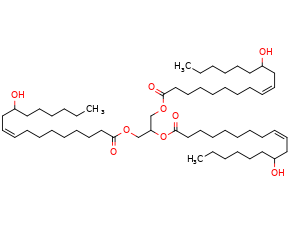
Castor oil
CAS No. 8001-79-4
Castor oil( Castor Oil | NCI-C55163 | CCRIS 4596 )
Catalog No. M19115 CAS No. 8001-79-4
Castor Oil is a vegetable oil pressed from the seeds of the castor bean, Ricinus communis, used as a laxative and as an excipient in medicinally.
Purity : >98% (HPLC)
 COA
Datasheet
HNMR
HPLC
MSDS
Handing Instructions
COA
Datasheet
HNMR
HPLC
MSDS
Handing Instructions
| Size | Price / USD | Stock | Quantity |
| 100MG | Get Quote | In Stock |


|
| 200MG | Get Quote | In Stock |
|
| 500MG | Get Quote | In Stock |
|
| 1G | 27 | In Stock |
|
Biological Information
-
Product NameCastor oil
-
NoteResearch use only, not for human use.
-
Brief DescriptionCastor Oil is a vegetable oil pressed from the seeds of the castor bean, Ricinus communis, used as a laxative and as an excipient in medicinally.
-
DescriptionCastor Oil is a biochemical.(In Vitro):Castor oil (CO) is an inedible vegetable oil that has been employed extensively as a bioresource material for the synthesis of biodegradable polymers, cosmetics, lubricants, biofuels, coatings and adhesives. Castor oil is used in medicine, pharmaceuticals and biorefineries, due to its versatile chemistry.(In Vivo):Castor oil is a natural triglyceride which has a laxative effect and induces labor in pregnant females. When given castor oil, wild-type mice respond with a strong diarrhea, starting about 30 min after application. The laxative effect lasts for about 2 h.
-
In VitroCastor oil (CO) is an inedible vegetable oil that has been employed extensively as a bioresource material for the synthesis of biodegradable polymers, cosmetics, lubricants, biofuels, coatings and adhesives. Castor oil is used in medicine, pharmaceuticals and biorefineries, due to its versatile chemistry.
-
In VivoCastor oil is a natural triglyceride which has a laxative effect and induces labor in pregnant females. When given castor oil, wild-type mice respond with a strong diarrhea, starting about 30 min after application. The laxative effect lasts for about 2 h.
-
SynonymsCastor Oil | NCI-C55163 | CCRIS 4596
-
PathwayOthers
-
TargetOther Targets
-
RecptorOthers
-
Research Area——
-
Indication——
Chemical Information
-
CAS Number8001-79-4
-
Formula Weight933.45
-
Molecular FormulaC57H104O9
-
Purity>98% (HPLC)
-
SolubilityIn Vitro:?Ethanol : 4.55 mg/mL (50.61 m)
-
SMILESCCCCCCC(O)CCCCCCCCCCC(=O)OCC(COC(=O)CCCCCCCCCCC(O)CCCCCC)OC(=O)CCCCCCCCCCC(O)CCCCCC
-
Chemical NameCastor Oil
Shipping & Storage Information
-
Storage(-20℃)
-
ShippingWith Ice Pack
-
Stability≥ 2 years
Reference
1. Thomas. Ullmann's Encyclopedia of Industrial Chemistry, 2005.
molnova catalog



related products
-
2,2-Bipyridine
2,2'-Bipyridine is a unique bioactive natural product molecular scaffold commonly used in the core structure of many chelating ligands.
-
zerumbone
Zerumbone is a natural monocyclic sesquiterpene first isolated from rhizomes of the wild ginger Z. zerumbet.It has also been shown to have anti-oxidant and anti-inflammatory activities contributing to immunomodulatory and hepatoprotective effects.
-
D-Ornithine monohydr...
Used as pharmaceutical intermediates.
