


 Cart
 sales@molnova.com




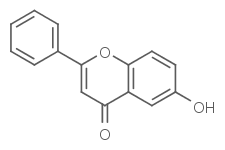
6-Hydroxyflavone
CAS No. 6665-83-4
6-Hydroxyflavone( —— )
Catalog No. M18971 CAS No. 6665-83-4
6-Hydroxyflavone is a noncompetitive inhibitors of cytochrome P450 2C9. It is a flavone, a type of chemical compound.
Purity : >98% (HPLC)
 COA
Datasheet
HNMR
HPLC
MSDS
Handing Instructions
| Size | Price / USD | Stock | Quantity |
| 100MG | 27 | In Stock |


|
| 200MG | Get Quote | In Stock |
|
| 500MG | Get Quote | In Stock |
|
| 1G | Get Quote | In Stock |
|
Biological Information
-
Product Name6-Hydroxyflavone
-
NoteResearch use only, not for human use.
-
Brief Description6-Hydroxyflavone is a noncompetitive inhibitors of cytochrome P450 2C9. It is a flavone, a type of chemical compound.
-
Description6-Hydroxyflavone is a noncompetitive inhibitors of cytochrome P450 2C9. It is a flavone, a type of chemical compound. It is reported in leaves of Barleria prionitis Linn. (a common Acanthaceae from India). 6-Hydroxyflavone may have a potential as a therapeutic drug capable for the treatment of anxiety-like disorders.
-
In Vitro——
-
In Vivo——
-
Synonyms——
-
PathwayOthers
-
TargetOther Targets
-
RecptorOthers
-
Research Area——
-
Indication——
Chemical Information
-
CAS Number6665-83-4
-
Formula Weight238.25
-
Molecular FormulaC15H10O3
-
Purity>98% (HPLC)
-
SolubilityIn Vitro:?DMSO : 125 mg/mL (524.68 mM)
-
SMILESc1ccc(cc1)c1cc(=O)c2c(o1)ccc(c2)O
-
Chemical Name——
Shipping & Storage Information
-
Storage(-20℃)
-
ShippingWith Ice Pack
-
Stability≥ 2 years
Reference
1. Wang X, et al. PLoS One. 2015 Mar 19;10(3):e0116409.
molnova catalog


related products
-
α-Glucosidase-IN-22
α-Glucosidase-IN-22 is a selective inhibitor of α-glucosidase (IC50=0.64 μM). α-Glucosidase-IN-22 has antidiabetic activity and has potential in type 2 diabetes (T2DM) studies.
-
R-E-D-V
REDV is the minimal active sequence within the CS5 site of the alternatively spliced type III connecting segment (IIICS) region of fibronectin. REDV can mediate adhesion to the IIICS region of plasma fibronectin by binding the integrin alpha 4 beta 1(α4β1). REDV can be used for the research of cell adhesion.
-
Tellimagrandin I
Tellimagrandin I
