


 Cart
Cart
 sales@molnova.com



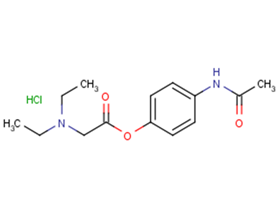
Propacetamol Hydrochloride
CAS No. 66532-86-3
Propacetamol Hydrochloride( Propacetamol Hydrochloride )
Catalog No. M18966 CAS No. 66532-86-3
Propacetamol is a prodrug of paracetamol (acetaminophen) with improved water solubility.
Purity : >98% (HPLC)
 COA
Datasheet
HNMR
HPLC
MSDS
Handing Instructions
COA
Datasheet
HNMR
HPLC
MSDS
Handing Instructions
| Size | Price / USD | Stock | Quantity |
| 100MG | 29 | In Stock |


|
| 200MG | Get Quote | In Stock |
|
| 500MG | Get Quote | In Stock |
|
| 1G | Get Quote | In Stock |
|
Biological Information
-
Product NamePropacetamol Hydrochloride
-
NoteResearch use only, not for human use.
-
Brief DescriptionPropacetamol is a prodrug of paracetamol (acetaminophen) with improved water solubility.
-
DescriptionPropacetamol is a prodrug of paracetamol (acetaminophen) with improved water solubility. Propacetamol is an analgesic drug delivered by IV when the oral application of NSAID is not appropriate or contradicted.
-
In Vitro——
-
In Vivo——
-
SynonymsPropacetamol Hydrochloride
-
PathwayOthers
-
TargetOther Targets
-
RecptorOthers
-
Research Area——
-
Indication——
Chemical Information
-
CAS Number66532-86-3
-
Formula Weight300.78
-
Molecular FormulaC14H21ClN2O3
-
Purity>98% (HPLC)
-
SolubilityIn Vitro:?H2O : 250 mg/mL (831.17 mM)
-
SMILESCl.CCN(CC)CC(=O)Oc1ccc(NC(C)=O)cc1
-
Chemical Name(4-Acetamidophenyl) 2-(diethylamino)acetate hydrochloride
Shipping & Storage Information
-
Storage(-20℃)
-
ShippingWith Ice Pack
-
Stability≥ 2 years
Reference
molnova catalog



related products
-
demethoxycurcumin b
Demethoxycurcumin is found in Curcuma zedoaria and Etlingera elatior. It has a role as a metabolite an antineoplastic agent and an anti-inflammatory agent.
-
(+)-ORM-10921
(+)-ORM-10921 is a conformation of ORM-10921 and can be used in chemical synthesis studies.
-
α-Tocopherol phospha...
α-Tocopherol phosphate (alpha-Tocopherol phosphate) is an antioxidant that scavenges UVA1-induced reactive oxygen species (ROS) and protects against long-wave UVA1-induced cell death.
