


 Cart
Cart
 sales@molnova.com



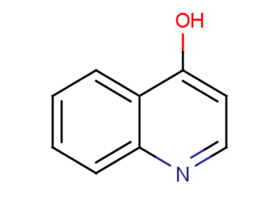
4-Hydroxyquinoline
CAS No. 611-36-9
4-Hydroxyquinoline( 4-Hydroxyquinoline | 4 Hydroxyquinoline | Kynurine | )
Catalog No. M18890 CAS No. 611-36-9
4-Hydroxyquinoline is a hydroxylated quinoline derivative with antimicrobial activity.
Purity : >98% (HPLC)
 COA
Datasheet
HNMR
HPLC
MSDS
Handing Instructions
COA
Datasheet
HNMR
HPLC
MSDS
Handing Instructions
| Size | Price / USD | Stock | Quantity |
| 100MG | Get Quote | In Stock |


|
| 200MG | Get Quote | In Stock |
|
| 500MG | Get Quote | In Stock |
|
| 1G | 27 | In Stock |
|
Biological Information
-
Product Name4-Hydroxyquinoline
-
NoteResearch use only, not for human use.
-
Brief Description4-Hydroxyquinoline is a hydroxylated quinoline derivative with antimicrobial activity.
-
Description4-Hydroxyquinoline is a quinolone compound which forms the core moiety of antibacterials.
-
In Vitro4-Quinolone (Kynurine) promotes tumor cell survival and motility by suppressing antitumor immune responses through AhR in an autocrine/paracrine fashion. This system is particularly active in human brain tumors where the activation of AhR enhances the expression of TDO producing more kynurine and kynurinic acid. In the healthy human brain, very low levels of TDO exist, whereas, in human brain tumors, the TDO protein levels increase with malignancy.
-
In Vivo——
-
Synonyms4-Hydroxyquinoline | 4 Hydroxyquinoline | Kynurine |
-
PathwayOthers
-
TargetAntioxidant
-
RecptorAntibacterial
-
Research Area——
-
Indication——
Chemical Information
-
CAS Number611-36-9
-
Formula Weight145.16
-
Molecular FormulaC9H7NO
-
Purity>98% (HPLC)
-
SolubilityIn Vitro:?DMSO : 100 mg/mL (688.90 mM)
-
SMILESOc1ccnc2ccccc12
-
Chemical Name4-Hydroxyquinoline
Shipping & Storage Information
-
Storage(-20℃)
-
ShippingWith Ice Pack
-
Stability≥ 2 years
Reference
1. Criado S, et al. Journal of Photochemistry & Photobiology B Biology, 2003, 71(1):19-25.
molnova catalog



related products
-
Cinnamtannin B-1
Cinnamtannin B1 is an A-type proanthocyanidin contained in several plant species such as Vaccinium vitis-idaea, Laurus nobilis L., Cinnamomum zeylanicum, and Lindera umbellata.
-
7-Hydroxycoumarin
It is a widespread natural product of the coumarin family. It has been reported to have antioxidant properties.
-
Salviaflaside
Salviaflaside is the main bioactive component of Prunella vulgaris and has antioxidant activity.
