


 Cart
Cart
 sales@molnova.com



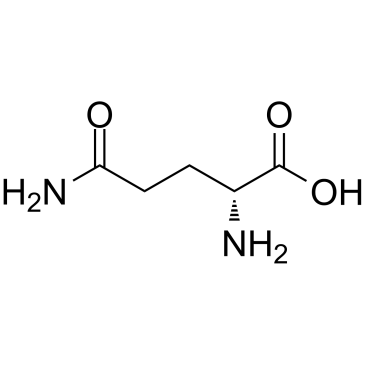
D-glutamine
CAS No. 5959-95-5
D-glutamine( —— )
Catalog No. M18869 CAS No. 5959-95-5
D-glutamine, an D type stereoisomer of glutamine, is one of the 20 amino acids which is encoded by the standard genetic code.
Purity : >98% (HPLC)
 COA
Datasheet
HNMR
HPLC
MSDS
Handing Instructions
COA
Datasheet
HNMR
HPLC
MSDS
Handing Instructions
| Size | Price / USD | Stock | Quantity |
| 25MG | 29 | In Stock |


|
| 50MG | 43 | In Stock |
|
| 100MG | 56 | In Stock |
|
| 200MG | Get Quote | In Stock |
|
| 500MG | 91 | In Stock |
|
| 1G | 118 | In Stock |
|
Biological Information
-
Product NameD-glutamine
-
NoteResearch use only, not for human use.
-
Brief DescriptionD-glutamine, an D type stereoisomer of glutamine, is one of the 20 amino acids which is encoded by the standard genetic code.
-
DescriptionD-glutamine, an D type stereoisomer of glutamine, is one of the 20 amino acids which is encoded by the standard genetic code.
-
In VitroGlutamine is a key amino acid in the central nervous system (CNS), playing an important role in the glutamate/GABA-Glutamine cycle (GGC). In the GGC,Glutamine is transferred from astrocytes to neurons, where it will replenish the inhibitory and excitatory neurotransmitter pools. D-Glutamine has been used to study its role in conferring protection against acetaldehyde-induced disruption of barrier function in Caco-2 cell monolayer. Role of L-Glutamine in the protection of intestinal epithelium from acetaldehyde-induced disruption of barrier function is evaluated in Caco-2 cell monolayer. L-Glutamine reduced the acetaldehyde-induced decrease in transepithelilal electrical resistance and increase in permeability to inulin and lipopolysaccharide in a time- and dose-dependent manner; D-Glutamine, L-aspargine, L-arginine, L-lysine, or L-alanine produced no significant protection. D-Glutamine also fails to influence the acetaldehyde-induced decrease in TER and increase in inulin flux. D-Glutamine or glutaminase inhibitor by themselves did not influence TER or inulin flux in control or acetaldehyde-treated cell monolayers. Lack of effect of D-Glutamine in protection from acetaldehyde indicates that the L-Glutamine-mediated protection is stereospecific.
-
In Vivo——
-
Synonyms——
-
PathwayMicrobiology/Virology
-
TargetAntifection
-
RecptorOthers
-
Research AreaMetabolic Disease
-
Indication——
Chemical Information
-
CAS Number5959-95-5
-
Formula Weight146.14
-
Molecular FormulaC5H10N2O3
-
Purity>98% (HPLC)
-
SolubilityH2O : ≥ 32 mg/mL; 218.97 mM
-
SMILESN[C@H](CCC(=O)N)C(=O)O
-
Chemical Name——
Shipping & Storage Information
-
Storage(-20℃)
-
ShippingWith Ice Pack
-
Stability≥ 2 years
Reference
1. Lee WJ, et al. Am J Physiol, 1998, 274(4 Pt 1), C1101-C1107.
molnova catalog



related products
-
1,7-Dihydroxy-2,3-me...
1,7-Dihydroxy-2,3-methylenedioxyxanthone is found in Polygala cyparissias which is a small herb found in Brazil, Argentina and Uruguay.
-
Niazinin
Niazinin is a thiocarbamate glycoside with antileishmanial activities, with an IC50 value of 5.25 μM. Niazinin also shows a binding affinity with the target protein 3CL protease. Niazinin has promising leishmanicidal, anti-inflammatory and anti-pyretic activity.
-
8-Geranyloxypsoralen
8-Geranyloxypsoralen inhibits α2-secretase (BACE1) activity in non-competitive manner, with the IC(50) values <25.0 μM, it can induce vasorelaxation on rat arterial tissues.
