


 Cart
Cart
 sales@molnova.com



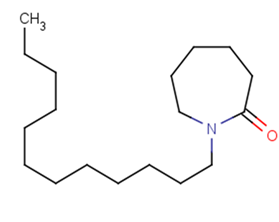
Laurocapram
CAS No. 59227-89-3
Laurocapram( Laurocapram | Azone | N-Lauryl caprolactam | Tranzone )
Catalog No. M18861 CAS No. 59227-89-3
Laurocapram is a percutaneous enhancer. Upon application to the skin, laurocapram interacts with lipids in the stratum corneum and may enhance the ability of the skin to absorb a hydrophilic chemical.
Purity : >98% (HPLC)
 COA
Datasheet
HNMR
HPLC
MSDS
Handing Instructions
COA
Datasheet
HNMR
HPLC
MSDS
Handing Instructions
| Size | Price / USD | Stock | Quantity |
| 100MG | Get Quote | In Stock |


|
| 200MG | Get Quote | In Stock |
|
| 500MG | Get Quote | In Stock |
|
| 1G | 27 | In Stock |
|
Biological Information
-
Product NameLaurocapram
-
NoteResearch use only, not for human use.
-
Brief DescriptionLaurocapram is a percutaneous enhancer. Upon application to the skin, laurocapram interacts with lipids in the stratum corneum and may enhance the ability of the skin to absorb a hydrophilic chemical.
-
DescriptionLaurocapram, also known as Azone, is a chemical enhancer for skin permeation of drug. Azone markedly fluidized liposomal lipids (as a model lipid system) compared with other enhancers. Azone increased water content in the stratum corneum, as measured by skin conductance.
-
In Vitro——
-
In Vivo——
-
SynonymsLaurocapram | Azone | N-Lauryl caprolactam | Tranzone
-
PathwayOthers
-
TargetOther Targets
-
RecptorOthers
-
Research AreaOthers-Field
-
Indication——
Chemical Information
-
CAS Number59227-89-3
-
Formula Weight281.48
-
Molecular FormulaC18H35NO
-
Purity>98% (HPLC)
-
SolubilityIn Vitro:?DMSO : 100 mg/mL (355.27 mM)
-
SMILESCCCCCCCCCCCCN1CCCCCC1=O
-
Chemical Name2H-Azepin-2-one, 1-dodecylhexahydro-
Shipping & Storage Information
-
Storage(-20℃)
-
ShippingWith Ice Pack
-
Stability≥ 2 years
Reference
molnova catalog



related products
-
Substance P reversed...
Substance P reversed sequence
-
Salifungin
Detail unknown.
-
[Val5,Asn9]-Angioten...
[Val5,Asn9]-Angiotensin I
