


 Cart
Cart
 sales@molnova.com



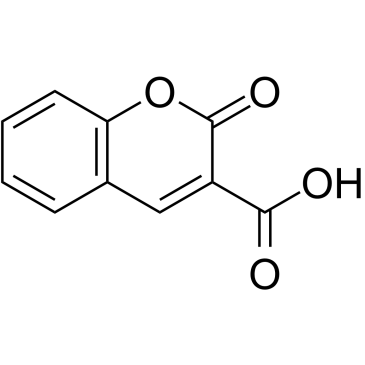
Coumarin-3-carboxylic acid
CAS No. 531-81-7
Coumarin-3-carboxylic acid( —— )
Catalog No. M18749 CAS No. 531-81-7
The combination of Valproic acid with coumarin-3-carboxylic acid suppresses the proliferation and migration of lung cancer cells via EGFR/VEGFR2/c-Met-Akt-NF-κB signaling pathways.
Purity : >98% (HPLC)
 COA
Datasheet
HNMR
HPLC
MSDS
Handing Instructions
COA
Datasheet
HNMR
HPLC
MSDS
Handing Instructions
| Size | Price / USD | Stock | Quantity |
| 1 mL x 10 mM in DMSO | 28 | In Stock |


|
| 100MG | Get Quote | In Stock |
|
| 200MG | Get Quote | In Stock |
|
| 500MG | Get Quote | In Stock |
|
| 1G | 27 | In Stock |
|
Biological Information
-
Product NameCoumarin-3-carboxylic acid
-
NoteResearch use only, not for human use.
-
Brief DescriptionThe combination of Valproic acid with coumarin-3-carboxylic acid suppresses the proliferation and migration of lung cancer cells via EGFR/VEGFR2/c-Met-Akt-NF-κB signaling pathways.
-
DescriptionThe combination of Valproic acid with coumarin-3-carboxylic acid suppresses the proliferation and migration of lung cancer cells via EGFR/VEGFR2/c-Met-Akt-NF-κB signaling pathways; this combination may have a wide therapeutic and/or adjuvant therapeutic application in the treatment of lung cancer.
-
In Vitro——
-
In Vivo——
-
Synonyms——
-
PathwayOthers
-
TargetOther Targets
-
RecptorOthers
-
Research Area——
-
Indication——
Chemical Information
-
CAS Number531-81-7
-
Formula Weight190.15
-
Molecular FormulaC10H6O4
-
Purity>98% (HPLC)
-
SolubilityIn Vitro:?DMSO : 100 mg/mL (525.90 mM)
-
SMILESC1=CC=C2C(=C1)C=C(C(=O)O2)C(=O)O
-
Chemical Name——
Shipping & Storage Information
-
Storage(-20℃)
-
ShippingWith Ice Pack
-
Stability≥ 2 years
Reference
1.Xin Liu, et al. 2013 Aug; 65(4): 597–608.
molnova catalog



related products
-
1-Octacosanol
1-Octacosanol is an active biochemical.
-
Ganoderenic acid A
Ganoderenic acid A has a potent hepatoprotective, and cytotoxic effects, it shows inhibitory activity on human aldose reductase in vitro.From the acidic fraction, potent human aldose reductase inhibitors, ganoderic acid C2 (1) and Ganoderenic acid A (2), were isolated together with three related compounds.
-
Saccharin
Flavoring agent and non-nutritive sweetener.
