


 Cart
Cart
 sales@molnova.com



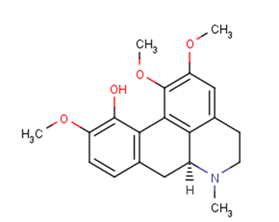
S-Isocorydine(+)
CAS No. 475-67-2
S-Isocorydine(+)( Isocorydine | Luteanin | d-Isocorydine | NSC32979 )
Catalog No. M18591 CAS No. 475-67-2
S-Isocorydine(+) and its derivatives have anticancer activities.
Purity : >98% (HPLC)
 COA
Datasheet
HNMR
HPLC
MSDS
Handing Instructions
COA
Datasheet
HNMR
HPLC
MSDS
Handing Instructions
| Size | Price / USD | Stock | Quantity |
| 1 mL x 10 mM in DMSO | 49 | In Stock |


|
| 5MG | 45 | In Stock |
|
| 10MG | 76 | In Stock |
|
| 25MG | 159 | In Stock |
|
| 50MG | 231 | In Stock |
|
| 100MG | Get Quote | In Stock |
|
| 200MG | Get Quote | In Stock |
|
| 500MG | Get Quote | In Stock |
|
| 1G | Get Quote | In Stock |
|
Biological Information
-
Product NameS-Isocorydine(+)
-
NoteResearch use only, not for human use.
-
Brief DescriptionS-Isocorydine(+) and its derivatives have anticancer activities.
-
DescriptionIsocorydine is an alkaloid from root tubers of Stephania Kwangsiensis H.S. Lo.(In Vitro):Isocorydine (0-400 ug/ml; 48 hours) show a significant decrease in the IC50 for ICD and DOX, the CI values are 0.605, 0.644, 0.804, and 0.707 respectively for Huh-7, Hep-G2, SNU-449 and SNU-387.Isocorydine (0-400 ug/ml; 48 hours) abrogates DOX-induced upregulation of mesenchymal markers and the downregulation of epithelial markers in human HCC cell lines.(In Vivo):Isocorydine (intraperitoneal injection; 0.4 mg/kg; every 2 days for 2 weeks) retards the tumor growth, but the combined treatment of Doxorubicin (DOX) or ICD significantly inhibits tumor growth.
-
In VitroIsocorydine (0-400 ug/ml; 48 hours) show a significant decrease in the IC50 for ICD and DOX, the CI values are 0.605, 0.644, 0.804, and 0.707 respectively for Huh-7, Hep-G2, SNU-449 and SNU-387. Isocorydine (0-400 ug/ml; 48 hours)abrogates DOX-induced upregulation of mesenchymal markers and the downregulation of epithelial markers in human HCC cell lines. Cell Viability Assay Cell Line:Huh-7, Hep-G2 , SNU-387, SNU-449 cells Concentration:0-400 ug/ml Incubation Time:24 hours Result:Had a higher cytotoxicity in HCC cells in comparison to ICD or DOX alone.Western Blot Analysis Cell Line:Huh-7, Hep-G2 , SNU-387, SNU-449 cells Concentration:Incubation Time:24 hours Result:Downregulated protein levels of Claundin-1 and E-cadherin.
-
In VivoIsocorydine (intraperitoneal injection; 0.4 mg/kg; every 2 days for 2 weeks) retards the tumor growth, but the combined treatment of Doxorubicin (DOX) or ICD significantly inhibits tumor growth. Animal Model:Female nude mice Dosage:0.4 mg/ml Administration:Injected intraperitoneally every 2 days for 2 weeks Result:Combined treatment of isocorydine and DOX showed a promising potential to eradicate HCC.
-
SynonymsIsocorydine | Luteanin | d-Isocorydine | NSC32979
-
PathwayOthers
-
TargetOther Targets
-
RecptorOthers
-
Research Area——
-
Indication——
Chemical Information
-
CAS Number475-67-2
-
Formula Weight341.41
-
Molecular FormulaC20H23NO4
-
Purity>98% (HPLC)
-
SolubilityIn Vitro:?DMSO : 20 mg/mL (58.58 mM)
-
SMILESCN1CCc2cc(c(c3c2[C@@H]1Cc1c3c(c(cc1)OC)O)OC)OC
-
Chemical Name(S)-1,2,10-trimethoxy-6-methyl-5,6,6a,7-tetrahydro-4H-dibenzo[de,g]quinolin-11-ol
Shipping & Storage Information
-
Storage(-20℃)
-
ShippingWith Ice Pack
-
Stability≥ 2 years
Reference
1. Sun H, et al. PLoS One. 2012;7(5):e36808.
molnova catalog



related products
-
Methyl furan-2-carbo...
Methyl furan-2-carboxylate is a natural product that found in cocoa and cocoa products.
-
2-Butylhexanoic acid
2-Butylhexanoic acid is an intermediate in organic synthesis.
-
LMP2 (236 - 244) , R...
LMP2 (236 - 244) , RRR
