


 Cart
 sales@molnova.com




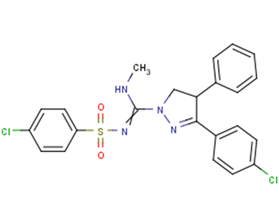
SLV319
CAS No. 362519-49-1
SLV319( (±)-SLV319 | (±)-BMS6462 )
Catalog No. M18476 CAS No. 362519-49-1
SLV319 has been used in trials studying the treatment of Obesity and Obesity and Type 2 Diabetes.
Purity : >98% (HPLC)
 COA
Datasheet
HNMR
HPLC
MSDS
Handing Instructions
| Size | Price / USD | Stock | Quantity |
| 1 mL x 10 mM in DMSO | 45 | In Stock |


|
| 5MG | 41 | In Stock |
|
| 10MG | 79 | In Stock |
|
| 25MG | 159 | In Stock |
|
| 50MG | 286 | In Stock |
|
| 100MG | 415 | In Stock |
|
| 200MG | 576 | In Stock |
|
| 500MG | Get Quote | In Stock |
|
| 1G | Get Quote | In Stock |
|
Biological Information
-
Product NameSLV319
-
NoteResearch use only, not for human use.
-
Brief DescriptionSLV319 has been used in trials studying the treatment of Obesity and Obesity and Type 2 Diabetes.
-
DescriptionSLV319 has been used in trials studying the treatment of Obesity and Obesity and Type 2 Diabetes.(In Vitro):Cannabinoid receptor 1 (CB1R) antagonists appear to be promising drugs for the treatment of obesity, however, serious side effects have hampered their clinical application. Ibipinabant is a new, potent [Ki (CB1)=7.8 nM] and selective [Ki (CB2)=7.943 nM] CB1 antagonist [pA2 for arachidonic acid release in CHO cells=9.9] with in vitro pharmacological characteristics similar to rimonabant including inverse agonism and brain penetrance.(In Vivo):(±)-Ibipinabant ((±)-SLV319) (3 mg/kg) reduces unfasted glucose to a significantly greater degree than rimonabant at the same dose on days 17, 28 and 38. Chronic treatment with (±)-Ibipinabant ((±)-SLV319) significantly attenuates the progression of diabetes in ZDF rats, blunting the increase in blood glucose and HbA1c over time. Ibipinabant also reduces the hyperinsulinemia apparent at 6-8 weeks of age and attenuates the dramatic reduction in insulin levels observed 1-2 weeks later.
-
In VitroCannabinoid receptor 1 (CB1R) antagonists appear to be promising drugs for the treatment of obesity, however, serious side effects have hampered their clinical application. Ibipinabant is a new, potent [Ki (CB1)=7.8 nM] and selective [Ki (CB2)=7.943 nM] CB1 antagonist [pA2 for arachidonic acid release in CHO cells=9.9] with in vitro pharmacological characteristics similar to rimonabant including inverse agonism and brain penetrance.
-
In Vivo(±)-Ibipinabant ((±)-SLV319) (3 mg/kg) reduces unfasted glucose to a significantly greater degree than rimonabant at the same dose on days 17, 28 and 38. Chronic treatment with (±)-Ibipinabant ((±)-SLV319) significantly attenuates the progression of diabetes in ZDF rats, blunting the increase in blood glucose and HbA1c over time. Ibipinabant also reduces the hyperinsulinemia apparent at 6-8 weeks of age and attenuates the dramatic reduction in insulin levels observed 1-2 weeks later.
-
Synonyms(±)-SLV319 | (±)-BMS6462
-
PathwayOthers
-
TargetOther Targets
-
RecptorCB1
-
Research Area——
-
Indication——
Chemical Information
-
CAS Number362519-49-1
-
Formula Weight487.4
-
Molecular FormulaC23H20Cl2N4O2S
-
Purity>98% (HPLC)
-
SolubilityDMSO : ≥ 31 mg/mL; 63.60 mM
-
SMILESO=S(=O)(N=C(NC)N1CC(C(=N1)c2ccc(Cl)cc2)c3ccccc3)c4ccc(Cl)cc4
-
Chemical Name——
Shipping & Storage Information
-
Storage(-20℃)
-
ShippingWith Ice Pack
-
Stability≥ 2 years
Reference


-
8-Hydroxyguanosine
8-hydroxyguanosine (8-OHG) is a marker for measuring the rate of oxidative damage to nucleic acids and lipids.The concentration of 8-OHG in CSF in Parkinson's disease (PD) patients is approximately three-fold that in controls. The concentration of 8-OHG in CSF decreased significantly with the duration of disease. However, the concentration of 8-OHG in serum was not significantly altered in PD patients compared to that in controls.
-
Atacicept
Atacicept (TACI-Ig) is a homodimeric fusion protein that inhibits B-cell stimulation by binding to B-lymphocyte stimulatory factors and proliferation-inducing ligands, and can be used in the study of systemic lupus erythematosus, lupus nephritis, rheumatoid arthritis, multiple sclerosis, and various B-cell malignancies.
-
Bupirimate
Bupirimate, an active ingredient in plant protection products, is commonly used as a systemic fungicide and finds applications in controlling powdery mildew in roses, apple plantations. It belongs to the family of pyrimidines.
