


 Cart
Cart
 sales@molnova.com



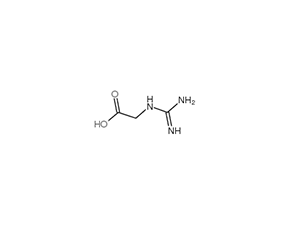
Guanidoacetic acid
CAS No. 352-97-6
Guanidoacetic acid( Glycocyamine | AI3-17119 | AI3 17119 | AI317119 )
Catalog No. M18468 CAS No. 352-97-6
Guanidinoacetic acid, a precursor of creatine, is a replacement of dietary arginine and could support overall energy homeostasis of the bird.
Purity : >98% (HPLC)
 COA
Datasheet
HNMR
HPLC
MSDS
Handing Instructions
COA
Datasheet
HNMR
HPLC
MSDS
Handing Instructions
| Size | Price / USD | Stock | Quantity |
| 50MG | 29 | In Stock |


|
| 100MG | 38 | In Stock |
|
| 200MG | Get Quote | In Stock |
|
| 500MG | 83 | In Stock |
|
| 1G | 120 | In Stock |
|
Biological Information
-
Product NameGuanidoacetic acid
-
NoteResearch use only, not for human use.
-
Brief DescriptionGuanidinoacetic acid, a precursor of creatine, is a replacement of dietary arginine and could support overall energy homeostasis of the bird.
-
DescriptionGuanidinoacetic acid, a precursor of creatine, is a replacement of dietary arginine and could support overall energy homeostasis of the bird. Guanidinoacetic Acid is an important marker for renal failure, kidney transplantation, and the renal metabolic activity. The compound is a metabolite of guanidine.
-
In Vitro——
-
In Vivo——
-
SynonymsGlycocyamine | AI3-17119 | AI3 17119 | AI317119
-
PathwayOthers
-
TargetOther Targets
-
RecptorOthers
-
Research Area——
-
Indication——
Chemical Information
-
CAS Number352-97-6
-
Formula Weight117.11
-
Molecular FormulaC3H7N3O2
-
Purity>98% (HPLC)
-
SolubilityIn Vitro:?1M HCl : 50 mg/mL (426.95 mM)
-
SMILESN=C(N)NCC(=O)O
-
Chemical NameGlycine, N-(aminoiminomethyl)-
Shipping & Storage Information
-
Storage(-20℃)
-
ShippingWith Ice Pack
-
Stability≥ 2 years
Reference
1. Dilger RN, et al. Dietary guanidino acetic acid is an efficacious replacement for arginine for young chicks. Poult Sci. 2013 Jan;92(1):171-7.
molnova catalog



related products
-
Puerol B
(+/-)-Puerol B shows inhibitory activity on AGEs formation in vitro.
-
Monoethyl itaconate
Monoethyl itaconate is a free radical can be used for polymerization.
-
[SER140]-PLP(139-151...
[SER140]-PLP(139-151) is a polypeptide fragment of the lipid protein of myelin.
