


 Cart
Cart
 sales@molnova.com


 Home -
Products -
Cytoskeleton/Cell Adhesion Molecules -
Microtubule/Tubulin -
Sodium?Dichloroacetate
Home -
Products -
Cytoskeleton/Cell Adhesion Molecules -
Microtubule/Tubulin -
Sodium?Dichloroacetate
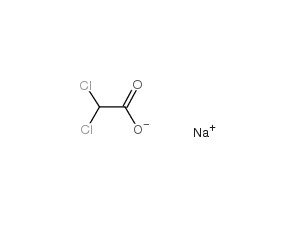
Sodium?Dichloroacetate
CAS No. 2156-56-1
Sodium?Dichloroacetate( Sodium Dichloroacetate | CPC-211 )
Catalog No. M18240 CAS No. 2156-56-1
Dichloroacetate ion inhibits pyruvate dehydrogenase kinase, resulting in the inhibition of glycolysis and a decrease in lactate production.
Purity : >98% (HPLC)
 COA
Datasheet
HNMR
HPLC
MSDS
Handing Instructions
COA
Datasheet
HNMR
HPLC
MSDS
Handing Instructions
| Size | Price / USD | Stock | Quantity |
| 1 mL x 10 mM in DMSO | 48 | In Stock |


|
| 50MG | 29 | In Stock |
|
| 100MG | 42 | In Stock |
|
| 200MG | Get Quote | In Stock |
|
| 500MG | 86 | In Stock |
|
| 1G | 124 | In Stock |
|
Biological Information
-
Product NameSodium?Dichloroacetate
-
NoteResearch use only, not for human use.
-
Brief DescriptionDichloroacetate ion inhibits pyruvate dehydrogenase kinase, resulting in the inhibition of glycolysis and a decrease in lactate production.
-
DescriptionSodium Dichloroacetate, also known as CPC-211; DCA; X-11S, is a Pyruvate dehydrogenase kinase inhibitor potentially for the treatment of myocardia ischemia, ischemic. Sodium dichloroacetate also exhibits anti-leukemic activity in B-chronic lymphocytic leukemia (B-CLL) and synergizes with the p53 activator Nutlin-3. Sodium dichloroacetate (DCA) reduces apoptosis in colorectal tumor hypoxia.(In Vitro):Sodium dichloroacetate increases ROS generation in mitochondria. Sodium dichloroacetate affects cell growth and viability through the ROS production increase derived from the promotion of oxidative metabolism. The effects of Sodium dichloroacetate on multiple myeloma cell viability, cell cycle arrest, and apoptotic cell death were associated with pyruvate dehydrogenase kinases (PDK) inhibition, restored pyruvate dehydrogenase (PDH) activity, and the promotion of oxidative metabolism in association with increased intracellular ROS production which depends on the Sodium dichloroacetate dose. The Sodium dichloroacetate effects cooperated with C I inhibition promoting the oxidative stress in rat VM-M3 glioblastoma cells. Increased ROS levels in Sodium dichloroacetate-treated cancer cells are related to the induction of apoptosis associated with the increased cytochrome c expression. Sodium dichloroacetate causes ROS-dependent T-cell differentiation. (In Vivo):The NKCC1 RNA expression levels in Sodium dichloroacetate-treated gonad-intact and castrated males are significantly decreased, and no such effect is determined in the gonad-intact and castrated female Sodium dichloroacetate-treated rats.A single Sodium dichloroacetate dose causes a significantly higher 24 h diuresis in Wistar male rats, and the increased diuresis is related to NKCC2 inhibition. The NKCC2 is more abundant in kidneys of intact females compared to intact males, with a greater transporter density in Sprague-Dawley female rats.The oral Sodium dichloroacetate bioavailability in na ve male rats dosed 5, 20 and 100 mg/kg is significantly lower than in GSTζ-depleted ones (10%, 13%, 81% and 31%, 75%, 100%, respectively). The liver extraction of Sodium dichloroacetate in the GSTζ-depleted rats has linear kinetics, but it decreases with the metabolism saturation at higher doses.
-
In VitroSodium dichloroacetate increases ROS generation in mitochondria. Sodium dichloroacetate affects cell growth and viability through the ROS production increase derived from the promotion of oxidative metabolism. The effects of Sodium dichloroacetate on multiple myeloma cell viability, cell cycle arrest, and apoptotic cell death were associated with pyruvate dehydrogenase kinases (PDK) inhibition, restored pyruvate dehydrogenase (PDH) activity, and the promotion of oxidative metabolism in association with increased intracellular ROS production which depends on the Sodium dichloroacetate dose. The Sodium dichloroacetate effects cooperated with C I inhibition promoting the oxidative stress in rat VM-M3 glioblastoma cells. Increased ROS levels in Sodium dichloroacetate-treated cancer cells are related to the induction of apoptosis associated with the increased cytochrome c expression. Sodium dichloroacetate causes ROS-dependent T-cell differentiation.
-
In VivoThe NKCC1 RNA expression levels in Sodium dichloroacetate-treated gonad-intact and castrated males are significantly decreased, and no such effect is determined in the gonad-intact and castrated female Sodium dichloroacetate-treated rats.A single Sodium dichloroacetate dose causes a significantly higher 24 h diuresis in Wistar male rats, and the increased diuresis is related to NKCC2 inhibition. The NKCC2 is more abundant in kidneys of intact females compared to intact males, with a greater transporter density in Sprague-Dawley female rats.The oral Sodium dichloroacetate bioavailability in na?ve male rats dosed 5, 20 and 100 mg/kg is significantly lower than in GSTζ-depleted ones (10%, 13%, 81% and 31%, 75%, 100%, respectively). The liver extraction of Sodium dichloroacetate in the GSTζ-depleted rats has linear kinetics, but it decreases with the metabolism saturation at higher doses.
-
SynonymsSodium Dichloroacetate | CPC-211
-
PathwayCytoskeleton/Cell Adhesion Molecules
-
TargetMicrotubule/Tubulin
-
RecptorPDK
-
Research Area——
-
Indication——
Chemical Information
-
CAS Number2156-56-1
-
Formula Weight150.92
-
Molecular FormulaC2HCl2NaO2
-
Purity>98% (HPLC)
-
SolubilityIn Vitro:?H2O : 100 mg/mL (662.60 mM)
-
SMILESC(C(=O)[O-])(Cl)Cl.[Na+]
-
Chemical NameSodium Dichloroacetate
Shipping & Storage Information
-
Storage(-20℃)
-
ShippingWith Ice Pack
-
Stability≥ 2 years
Reference
1. Bonnet S, et al. Y Cell. 2007 Jan;11(1):37-51.
molnova catalog



related products
-
D64131
D-64131 is a tubulin polymerization inhibitor with an IC50 value of 0.53 μM.
-
KHS101 hydrochloride
KHS101 is a TACC3 inhibitor and can selectively induce a neuronal differentiation phenotype.
-
Plinabulin
Plinabulin (NPI-2358) is a vascular disrupting agent (VDA) against tubulin-depolymerizing with IC50 of 9.8~18 nM in tumor cells. Phase 1/2.
