


 Cart
Cart
 sales@molnova.com



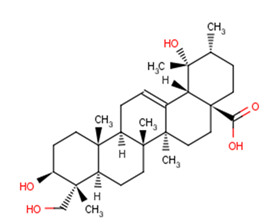
Rutundic acid
CAS No. 20137-37-5
Rutundic acid( —— )
Catalog No. M18203 CAS No. 20137-37-5
Rutundic acid has antitumor activity, exhibits potent tumor cell growth inhibiting property against Hela, A375, HepG2 , NCI-H446, and SPC-A
Purity : >98% (HPLC)
 COA
Datasheet
HNMR
HPLC
MSDS
Handing Instructions
COA
Datasheet
HNMR
HPLC
MSDS
Handing Instructions
| Size | Price / USD | Stock | Quantity |
| 1 mL x 10 mM in DMSO | 45 | In Stock |


|
| 2MG | 29 | In Stock |
|
| 5MG | 42 | In Stock |
|
| 10MG | 69 | In Stock |
|
| 25MG | 140 | In Stock |
|
| 50MG | 222 | In Stock |
|
| 100MG | 330 | In Stock |
|
| 200MG | 489 | In Stock |
|
| 500MG | Get Quote | In Stock |
|
| 1G | Get Quote | In Stock |
|
Biological Information
-
Product NameRutundic acid
-
NoteResearch use only, not for human use.
-
Brief DescriptionRutundic acid has antitumor activity, exhibits potent tumor cell growth inhibiting property against Hela, A375, HepG2 , NCI-H446, and SPC-A
-
DescriptionRutundic acid has antitumor activity, exhibits potent tumor cell growth inhibiting property against Hela, A375, HepG2 , NCI-H446, and SPC-A
-
In Vitro——
-
In Vivo——
-
Synonyms——
-
PathwayOthers
-
TargetOther Targets
-
RecptorOthers
-
Research AreaCancer
-
Indication——
Chemical Information
-
CAS Number20137-37-5
-
Formula Weight488.7
-
Molecular FormulaC30H48O5
-
Purity>98% (HPLC)
-
SolubilityIn Vitro:?DMSO : 100 mg/mL (204.62 mM)
-
SMILESC[C@@H]1CC[C@@]2(CC[C@]3(C)C(=CC[C@@H]4[C@@]5(C)CC[C@H](O)[C@@](C)(CO)[C@@H]5CC[C@@]34C)[C@@H]2[C@]1(C)O)C(O)=O
-
Chemical Name——
Shipping & Storage Information
-
Storage(-20℃)
-
ShippingWith Ice Pack
-
Stability≥ 2 years
Reference
molnova catalog



related products
-
Wilfordine
Wilfordine is an insecticidally active alkaloid, Na+-K+-ATPase may be an acting target of wilfordine against some larvae of insect.
-
Picropodophyllol
Picropodophyllol is a natural product isolated from the roots of Dysosma versipellis.
-
4-Beta-Hydroxycholes...
4β-hydroxy Cholesterol is a major oxysterol cholesterol metabolite and a precursor in the synthesis of bile acids that is found in human circulation.
