


 Cart
Cart
 sales@molnova.com



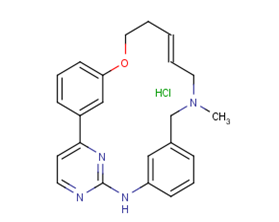
SB1317 hydrochloride
CAS No. ——
SB1317 hydrochloride ( —— )
Catalog No. M17701 CAS No. ——
SB1317 is an effective inhibitor of CDK2/JAK2/FLT3 (IC50: 13/73/56 nM).
Purity : >98% (HPLC)
 COA
Datasheet
HNMR
HPLC
MSDS
Handing Instructions
COA
Datasheet
HNMR
HPLC
MSDS
Handing Instructions
| Size | Price / USD | Stock | Quantity |
| 5MG | 113 | Get Quote |


|
| 10MG | 185 | Get Quote |
|
| 25MG | 333 | Get Quote |
|
| 50MG | 406 | Get Quote |
|
| 100MG | Get Quote | Get Quote |
|
| 200MG | Get Quote | Get Quote |
|
| 500MG | Get Quote | Get Quote |
|
| 1G | Get Quote | Get Quote |
|
Biological Information
-
Product NameSB1317 hydrochloride
-
NoteResearch use only, not for human use.
-
Brief DescriptionSB1317 is an effective inhibitor of CDK2/JAK2/FLT3 (IC50: 13/73/56 nM).
-
DescriptionSB1317 is an effective inhibitor of CDK2/JAK2/FLT3 (IC50: 13/73/56 nM).
-
In Vitro——
-
In Vivo——
-
Synonyms——
-
PathwayOthers
-
TargetOther Targets
-
RecptorCDK2| FLT3| JAK2
-
Research Area——
-
Indication——
Chemical Information
-
CAS Number——
-
Formula Weight408.92
-
Molecular FormulaC23H25ClN4O
-
Purity>98% (HPLC)
-
Solubility——
-
SMILESCN1C/C=C/CCOC2=CC=CC(=C2)C3=NC(=NC=C3)NC4=CC=CC(=C4)C1
-
Chemical Name——
Shipping & Storage Information
-
Storage(-20℃)
-
ShippingWith Ice Pack
-
Stability≥ 2 years
Reference
molnova catalog



related products
-
Desoxypicropodophyll...
Desoxypicropodophyllin 4-Desoxypicropodophyll otoxin
-
Triphenyl bismuth
Triphenyl bismuth is an additive for making biomedical resins visible on x-ray images and can be used as a radiopaque agent for orthopaedic bone cements.
-
2-O-Glucopyranosylcu...
2-O-β-D-Glucopyranosylcucurbitacin F 25-acetate is a cucurbitacin glucoside that can isolated from the more polar fractions of the MeOH extract of Cigarrilla mexicana.
