


 Cart
Cart
 sales@molnova.com



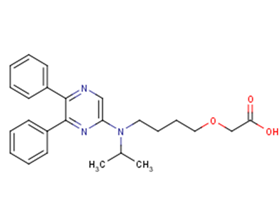
MRE-269
CAS No. 475085-57-5
MRE-269( MRE-269 | MRE269 | MRE 269 | ACT-333679 )
Catalog No. M17517 CAS No. 475085-57-5
Ursonic acid belongs to the family of Ursane Triterpenes whose structure is based on the pentacyclic ursane skeleton. It has potential as HIV-1 Protease Inhibitor.
Purity : >98% (HPLC)
 COA
Datasheet
HNMR
HPLC
MSDS
Handing Instructions
COA
Datasheet
HNMR
HPLC
MSDS
Handing Instructions
| Size | Price / USD | Stock | Quantity |
| 1 mL x 10 mM in DMSO | 49 | In Stock |


|
| 5MG | 45 | In Stock |
|
| 10MG | 85 | In Stock |
|
| 25MG | 136 | In Stock |
|
| 50MG | 182 | In Stock |
|
| 100MG | 307 | In Stock |
|
| 200MG | Get Quote | In Stock |
|
| 500MG | Get Quote | In Stock |
|
| 1G | Get Quote | In Stock |
|
Biological Information
-
Product NameMRE-269
-
NoteResearch use only, not for human use.
-
Brief DescriptionUrsonic acid belongs to the family of Ursane Triterpenes whose structure is based on the pentacyclic ursane skeleton. It has potential as HIV-1 Protease Inhibitor.
-
DescriptionMRE-269, also known as ACT-333679, is a long-acting and highly selective prostacyclin receptor agonist. MRE-269, the active form or metabolite of Selexipag (NS-304), is much more selective for the IP receptor than are the prostacyclin analogs beraprost and iloprost, which also have high affinity for the EP(3) receptor.
-
In VitroMRE-269 induces endothelium-independent vasodilation of rat extralobar pulmonary artery (EPA). MRE-269 or other IP receptor agonists including epoprostenol, iloprost, treprostinil and beraprost increase cAMP levels in hPASMC. MRE-269 induces concentration-dependent vasodilation in LPA(+), LPA(-), and SPA(-).
-
In VivoThe vasorelaxant effects of MRE-269 on rat small intralobar pulmonary artery (SIPA) and EPA are the same, while the other IP receptor agonists induce less vasodilation in SIPA than in EPA. MRE-269 produces substantial relaxation of rat small pulmonary artery, although its effects are only significant at high concentrations of above 10 μM (pEC50, 4.98±0.22). By contrast, in rat small pulmonary veins, MRE-269 only produces minimal relaxation over the whole concentration range, with only significant relaxation occurring at the two highest doses of MRE-269 of 10 and 100 μM.
-
SynonymsMRE-269 | MRE269 | MRE 269 | ACT-333679
-
PathwayOthers
-
TargetOther Targets
-
RecptorHIV-1 protease
-
Research AreaCardiovascular Disease
-
Indication——
Chemical Information
-
CAS Number475085-57-5
-
Formula Weight419.52
-
Molecular FormulaC25H29N3O3
-
Purity>98% (HPLC)
-
SolubilityDMSO : ≥ 50 mg/mL. 119.18 mM; H2O : < 0.1 mg/mL
-
SMILESCC1CCC2(CCC3(C(=CCC4C3(CCC5C4(CCC(=O)C5(C)C)C)C)C2C1C)C)C(=O)O
-
Chemical Name2-(4-((5,6-diphenylpyrazin-2-yl)(isopropyl)amino)butoxy)acetic acid
Shipping & Storage Information
-
Storage(-20℃)
-
ShippingWith Ice Pack
-
Stability≥ 2 years
Reference
molnova catalog



related products
-
Aristolactam FI
Piperolactam A is a natural product that can be isolated from root of Piper betle. Piperolactam A exhibits promising leishmanicidal action against wild type and drug resistant strains of Leishmania donovani.
-
5,6,7-Trimethoxycoum...
5,6,7-Trimethoxycoumarin shows moderate inhibitory activity against Micrococcus luteus, it also displays an intermediate cytotoxic effects against brine shrimp larvae. 5,6,7-Trimethoxycoumarin can improve gastroprotective effects, and it has low toxicity and minimal effects on drug-metabolizing enzymes.
-
Achyranthoside C
Achyranthoside C is a saponin from Achyranthes bidentata. The derivative of Achyranthoside C has inhibitory activity on osteoclast formation.
