


 Cart
 sales@molnova.com




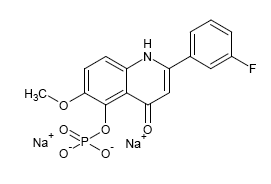
TRX818
CAS No. 1256037-58-7
TRX818( —— )
Catalog No. M17224 CAS No. 1256037-58-7
TRX-818 is an orally bioavailable agent with potential antineoplastic and anti-vasculogenic mimicry (VM) activities.
Purity : >98% (HPLC)
 COA
Datasheet
HNMR
HPLC
MSDS
Handing Instructions
| Size | Price / USD | Stock | Quantity |
| 2MG | 50 | In Stock |


|
| 5MG | 88 | In Stock |
|
| 10MG | 143 | In Stock |
|
| 25MG | 216 | In Stock |
|
| 50MG | 333 | In Stock |
|
| 100MG | Get Quote | In Stock |
|
| 200MG | Get Quote | In Stock |
|
| 500MG | Get Quote | In Stock |
|
| 1G | Get Quote | In Stock |
|
Biological Information
-
Product NameTRX818
-
NoteResearch use only, not for human use.
-
Brief DescriptionTRX-818 is an orally bioavailable agent with potential antineoplastic and anti-vasculogenic mimicry (VM) activities.
-
DescriptionTRX-818 is an orally bioavailable agent with potential antineoplastic and anti-vasculogenic mimicry (VM) activities.
-
In Vitro——
-
In Vivo——
-
Synonyms——
-
PathwayAngiogenesis
-
Targetc-Met/HGFR
-
RecptorOthers
-
Research AreaCancer
-
Indication——
Chemical Information
-
CAS Number1256037-58-7
-
Formula Weight393.21
-
Molecular FormulaC16H11FNNa2O5P
-
Purity>98% (HPLC)
-
Solubility——
-
SMILESc12c(c(c(cc1)OC)P(=O)([O-])[O-])c(=O)cc([nH]2)c1cc(ccc1)F.[Na+].[Na+]
-
Chemical Name——
Shipping & Storage Information
-
Storage(-20℃)
-
ShippingWith Ice Pack
-
Stability≥ 2 years
Reference
molnova catalog



related products
-
SAR125884
SAR125844 a potent and highly selective inhibitor of the MET receptor tyrosine kinase (RTK) for intravenous administration.?(IC50 value of 4.2 nmol/L).
-
Norcantharidin b
Norcantharidin is a synthetic anticancer compound which is a dual inhibitor for c-Met and EGFR in human colon cancers.
-
Capmatinib hydrochlo...
Capmatinib hydrochloride is an orally bioavailable inhibitor of the proto-oncogene c-Met (HGFR)with potential antineoplastic activity.Capmatinib was found to be highly selective for MET over other kinases.?It was active against cancer models that are characterized by MET amplification, marked MET overexpression, MET exon 14 skipping mutations, or MET activation via expression of the ligand hepatocyte growth factor (HGF).
