


 Cart
Cart
 sales@molnova.com



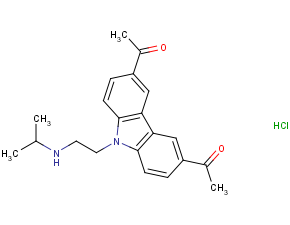
CBL0137 hydrochloride
CAS No. 1197397-89-9
CBL0137 hydrochloride( CBL0137 | CBL-0137 | CBL 0137 | Curaxin 137 )
Catalog No. M17184 CAS No. 1197397-89-9
CBL0137 activates p53 and inhibits NF-kB (EC50: 0.37/0.47 μM) in the cell-based p53 and NF-kB reporter assays, respectively. It also suppresses histone chaperone FACT.
Purity : >98% (HPLC)
 COA
Datasheet
HNMR
HPLC
MSDS
Handing Instructions
COA
Datasheet
HNMR
HPLC
MSDS
Handing Instructions
| Size | Price / USD | Stock | Quantity |
| 1 mL x 10 mM in DMSO | 103 | In Stock |


|
| 5MG | 124 | In Stock |
|
| 10MG | 206 | In Stock |
|
| 25MG | 414 | In Stock |
|
| 50MG | 550 | In Stock |
|
| 100MG | 732 | In Stock |
|
| 200MG | Get Quote | In Stock |
|
| 500MG | Get Quote | In Stock |
|
| 1G | Get Quote | In Stock |
|
Biological Information
-
Product NameCBL0137 hydrochloride
-
NoteResearch use only, not for human use.
-
Brief DescriptionCBL0137 activates p53 and inhibits NF-kB (EC50: 0.37/0.47 μM) in the cell-based p53 and NF-kB reporter assays, respectively. It also suppresses histone chaperone FACT.
-
DescriptionCBL0137 (CBL-0137) activates p53 and inhibits NF-kB with EC50s of 0.37 μM and 0.47 μM in the cell-based p53 and NF-kB reporter assays, respectively. It also inhibits histone chaperone FACT (facilitates chromatin transcription complex).(In Vitro):Treatment with CBL0137 hydrochloride leads to complete absence of living cells at concentrations above 2.5 μM. CBL0137 hydrochloride causes a greater reduction in the number of colonies formed of not only MiaPaCa-2 cells when combines with gemcitabine, but also gemcitabine-resistant PANC-1 cells. Treatment of human pancreatic cancer cells with CBL0137 hydrochloride results in a dose dependent reduction of protein and mRNA levels of RRM1 and RRM2. (In Vivo):The CBL0137 hydrochloride monotherapy group and the CBL0137 hydrochloride-gemcitabine combination group samples show large necrotic fields, numerous apoptotic bodies and loss of tumor cells. Sub-optimal doses of 50 to 60 mg/kg CBL0137 hydrochloride causes similar enhancement of gemcitabine antitumor activity as that produced by the maximum tolerated dose (MTD) of 90 mg/kg as indicated by the lack of statistically significant differences among the combination groups. CBL0137 hydrochloride inhibits FACT function through depletion of the pool of active FACT involved in transcription elongation. CBL0137 hydrochloride, given by oral gavage at a nontoxic dose of 30 mg/kg per day on a 5 days on/2 days off schedule, suppresses tumor growth in xenografts of colon (DLD-1), renal cell carcinoma (Caki-1), and melanoma (Mel-7) tumor cell lines and transplanted surgical samples from patients with pancreatic ductal adenocarcinoma.
-
In VitroTreatment with CBL0137 hydrochloride leads to complete absence of living cells at concentrations above 2.5 μM. CBL0137 hydrochloride causes a greater reduction in the number of colonies formed of not only MiaPaCa-2 cells when combines with gemcitabine, but also gemcitabine-resistant PANC-1 cells. Treatment of human pancreatic cancer cells with CBL0137 hydrochloride results in a dose dependent reduction of protein and mRNA levels of RRM1 and RRM2.
-
In VivoThe CBL0137 hydrochloride monotherapy group and the CBL0137 hydrochloride-gemcitabine combination group samples show large necrotic fields, numerous apoptotic bodies and loss of tumor cells. Sub-optimal doses of 50 to 60 mg/kg CBL0137 hydrochloride causes similar enhancement of gemcitabine antitumor activity as that produced by the maximum tolerated dose (MTD) of 90 mg/kg as indicated by the lack of statistically significant differences among the combination groups. CBL0137 hydrochloride inhibits FACT function through depletion of the pool of active FACT involved in transcription elongation. CBL0137 hydrochloride, given by oral gavage at a nontoxic dose of 30 mg/kg per day on a 5 days on/2 days off schedule, suppresses tumor growth in xenografts of colon (DLD-1), renal cell carcinoma (Caki-1), and melanoma (Mel-7) tumor cell lines and transplanted surgical samples from patients with pancreatic ductal adenocarcinoma.
-
SynonymsCBL0137 | CBL-0137 | CBL 0137 | Curaxin 137
-
PathwayApoptosis
-
TargetIL Receptor
-
RecptorFACT|p53|NF-κB
-
Research Area——
-
Indication——
Chemical Information
-
CAS Number1197397-89-9
-
Formula Weight372.88
-
Molecular FormulaC21H25ClN2O2
-
Purity>98% (HPLC)
-
SolubilityDMSO : 30 mg/mL. 80.45 mM; H2O : 15.2 mg/mL. 40.76 mM
-
SMILESCC(C)NCCN1C2=C(C=C(C=C2)C(=O)C)C3=C1C=CC(=C3)C(=O)C.Cl
-
Chemical Name1,1'-(9-(2-((1-Methylethyl)imino)ethyl)-9H-carbazole-3,6-diyl)bisethanone, hydrochloride (1:1)
Shipping & Storage Information
-
Storage(-20℃)
-
ShippingWith Ice Pack
-
Stability≥ 2 years
Reference
1.Gasparian AV,etal.Curaxins: anticancer compounds that simultaneously suppress NF-κB and activate p53 by targeting FACT.Sci Transl Med. 2011 Aug 10;3(95):95ra74.
molnova catalog



related products
-
Siltuximab
Siltuximab(CNTO-328) is a monoclonal antibody with anti-tumor activity targeting IL-6 for the study of giant lymph node hyperplasia (MCD) and COVID-19.
-
Procyanidin A2
Procyanidin A2 is a potential precursor of 5-(3',4'-dihydroxyphenyl)-γ-valerolactone, exhibits antioxidant, anti-inflammary, anti-hyperglycemia, and anti-type 2 diabetes activities.
-
Desacetyl asperulosi...
Deacetylasperulosidic acid is a natural compound of Morinda citrifolia fruit. It has antioxidant activity by increasing superoxide dismutase activity. It also prevents 4-nitroquinoline 1-oxide (4NQO) induced DNA damage in vitro suppresses IL-2 production along with the activation of natural killer cells.
