


 Cart
Cart
 sales@molnova.com



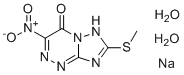
Triazavirin
CAS No. 928659-17-0
Triazavirin( Riamilovir sodium dihydrate )
Catalog No. M16651 CAS No. 928659-17-0
Triazavirin (Riamilovir sodium dihydrate) is a broad-spectrum antiviral agent targeting influenza viruses, lassa virus, TBEV and Ebola virus.
Purity : >98% (HPLC)
 COA
Datasheet
HNMR
HPLC
MSDS
Handing Instructions
COA
Datasheet
HNMR
HPLC
MSDS
Handing Instructions
| Size | Price / USD | Stock | Quantity |
| 1 mL x 10 mM in DMSO | 33 | In Stock |


|
| 5MG | 31 | In Stock |
|
| 10MG | 50 | In Stock |
|
| 25MG | 89 | In Stock |
|
| 50MG | 142 | In Stock |
|
| 100MG | 211 | In Stock |
|
| 200MG | 313 | In Stock |
|
| 500MG | Get Quote | In Stock |
|
| 1G | Get Quote | In Stock |
|
Biological Information
-
Product NameTriazavirin
-
NoteResearch use only, not for human use.
-
Brief DescriptionTriazavirin (Riamilovir sodium dihydrate) is a broad-spectrum antiviral agent targeting influenza viruses, lassa virus, TBEV and Ebola virus.
-
DescriptionTriazavirin (Riamilovir sodium dihydrate) is a broad-spectrum antiviral agent targeting influenza viruses, lassa virus, TBEV and Ebola virus; suppresses the replication of influenza virus in cell culture and in chicken chorioallantoic membranes, and protects mice from death caused by type A and B influenza viruses.(In Vitro):The efficacy of Triazavirin against the tick-borne encephalitis virus is estimated in the sensitive cell culture. In a concentration of 128 mcg/mL Triazavirin is shown active in inhibition of the tick-borne encephalitis virus reproduction (strain Sofiin) by accumulation in the SKEV cell culture.(In Vivo):The therapeutic efficacy Triazavirin against experimental Forest-Spring encephalitis on albino mice is studied. The results shows that in high doses (200-400 mg/kg) Triazavirin moderately protects the infected animals. A significant increase of the animal lifespan in the test groups (from 4.1 to 4.8 days) and a statistically valid decrease of the virus accumulation in the target organ are observed.
-
In VitroThe efficacy of Triazavirin against the tick-borne encephalitis virus is estimated in the sensitive cell culture. In a concentration of 128 mcg/mL Triazavirin is shown active in inhibition of the tick-borne encephalitis virus reproduction (strain Sofiin) by accumulation in the SKEV cell culture.
-
In VivoThe therapeutic efficacy Triazavirin against experimental Forest-Spring encephalitis on albino mice is studied. The results shows that in high doses (200-400 mg/kg) Triazavirin moderately protects the infected animals. A significant increase of the animal lifespan in the test groups (from 4.1 to 4.8 days) and a statistically valid decrease of the virus accumulation in the target organ are observed.
-
SynonymsRiamilovir sodium dihydrate
-
PathwayMicrobiology/Virology
-
TargetInfluenza Virus
-
RecptorInfluenza Virus
-
Research Area——
-
Indication——
Chemical Information
-
CAS Number928659-17-0
-
Formula Weight228.189
-
Molecular FormulaC5H4N6O3S
-
Purity>98% (HPLC)
-
SolubilityIn Vitro:?DMSO : 125 mg/mL (436.76 mM)
-
SMILESCSC1=NN2C(=C(N=NC2=N1)[N+](=O)[O-])[O-].O.O.[Na+]
-
Chemical Name7-(Methylthio)-3-nitro-[1,2,4]triazolo[5,1-c][1,2,4]triazin-4(6H)-one sodium sodium dihydrate
Shipping & Storage Information
-
Storage(-20℃)
-
ShippingWith Ice Pack
-
Stability≥ 2 years
Reference
1. Karpenko I, et al. Antimicrob Agents Chemother. 2010 May;54(5):2017-22.
2. Loginova SIa, et al. Antibiot Khimioter. 2007;52(11-12):18-20.
3. Loginova SIa, et al. Antibiot Khimioter. 2014;59(1-2):3-5.
molnova catalog



related products
-
SP187
SP187 (MON-DNJ) is a host-targeted iminosugar. It has anti-filovirus infection activity.SP187 is used for therapeutic use against influenza and dengue viruses.
-
Influenza HA 307-319
Influenza Hemagglutinin is an HLA-DRB 0101-restricted epitope from influenza hemagglutinin (307-319).
-
LYS01
LYS01 free base is a new lysosomal autophagy inhibitor.
