


 Cart
Cart
 sales@molnova.com



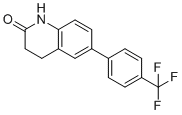
GSK-1
CAS No. 912953-25-4
GSK-1( —— )
Catalog No. M16555 CAS No. 912953-25-4
GSK-1 is an ATP-competitive inhibitor of the mitotic kinesin KSP with HCT116 cell IC50 of 36 nM.
Purity : >98% (HPLC)
 COA
Datasheet
HNMR
HPLC
MSDS
Handing Instructions
COA
Datasheet
HNMR
HPLC
MSDS
Handing Instructions
| Size | Price / USD | Stock | Quantity |
| 100MG | Get Quote | Get Quote |


|
| 200MG | Get Quote | Get Quote |
|
| 500MG | Get Quote | Get Quote |
|
| 1G | Get Quote | Get Quote |
|
Biological Information
-
Product NameGSK-1
-
NoteResearch use only, not for human use.
-
Brief DescriptionGSK-1 is an ATP-competitive inhibitor of the mitotic kinesin KSP with HCT116 cell IC50 of 36 nM.
-
DescriptionGSK-1 is an ATP-competitive inhibitor of the mitotic kinesin KSP with HCT116 cell IC50 of 36 nM; induces monopolar spindle formation in SKOV3 cells, and shows markedly greater potency (IC50 of 0.5 nM) in the ispinesib-resistant HCT116-D130V cell line.
-
In Vitro——
-
In Vivo——
-
Synonyms——
-
PathwayCytoskeleton/Cell Adhesion Molecules
-
TargetKinesin
-
RecptorKinesin
-
Research Area——
-
Indication——
Chemical Information
-
CAS Number912953-25-4
-
Formula Weight291.273
-
Molecular FormulaC16H12F3NO
-
Purity>98% (HPLC)
-
Solubility——
-
SMILESC1CC(=O)NC2=C1C=C(C=C2)C3=CC=C(C=C3)C(F)(F)F
-
Chemical Name6-(4-(trifluoromethyl)phenyl)-3,4-dihydroquinolin-2(1H)-one
Shipping & Storage Information
-
Storage(-20℃)
-
ShippingWith Ice Pack
-
Stability≥ 2 years
Reference
1. Luo L, et al. Nat Chem Biol. 2007 Nov;3(11):722-6.
molnova catalog



related products
-
PF-2771
PF-2771 is a potent, selective CENP-E inhibitor with IC50 of 16.1 nM.
-
MK-8267
MK-8267 (SCH 2047069) is a potent, orally bioavailable, brain penetrant kinesin spindle protein (KSP) inhibitor with EC50 of 3 nM.
-
TUG-891
TUG-891 is a G protein-coupled receptor (GPCR) expressed in intestine, adipocytes, and pro-inflammatory macrophages that is activated by long chain free fatty acids.
