


 Cart
Cart
 sales@molnova.com



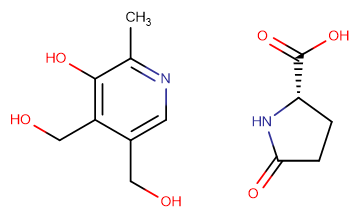
Metadoxine
CAS No. 74536-44-0
Metadoxine( —— )
Catalog No. M15842 CAS No. 74536-44-0
It is neurotransmitter stimulants.
Purity : >98% (HPLC)
 COA
Datasheet
HNMR
HPLC
MSDS
Handing Instructions
COA
Datasheet
HNMR
HPLC
MSDS
Handing Instructions
| Size | Price / USD | Stock | Quantity |
| 1 mL x 10 mM in DMSO | 28 | In Stock |


|
| 100MG | 31 | In Stock |
|
| 200MG | 45 | In Stock |
|
| 500MG | 73 | In Stock |
|
| 1G | 108 | In Stock |
|
Biological Information
-
Product NameMetadoxine
-
NoteResearch use only, not for human use.
-
Brief DescriptionIt is neurotransmitter stimulants.
-
DescriptionIt is neurotransmitter stimulants.(In Vitro):Simultaneous Metadoxine treatment notably inhibits adipogenic differentiation in a dose-dependent manner. Metadoxine treatment from day 4 through day 8 is required for inhibition of MDI-induced preadipocyte differentiation. Metadoxine prevents glutathione depletion and the increase in lipid peroxidation damage caused by ethanol and acetaldehyde in HepG2 cells. In hepatic stellate cells, Metadoxine prevents the increase in collagen and attenuated TNF-α secretion caused byacetaldehyde. Thus, Metadoxine could be useful in preventing the damage produced in early stages of alcoholic liver disease as it prevents the redox imbalance of the hepatocytes and prevents TNF-α induction, one of the earliest events in hepatic damage.
-
In VitroSimultaneous Metadoxine treatment notably inhibits adipogenic differentiation in a dose-dependent manner. Metadoxine treatment from day 4 through day 8 is required for inhibition of MDI-induced preadipocyte differentiation. Metadoxine prevents glutathione depletion and the increase in lipid peroxidation damage caused by ethanol and acetaldehyde in HepG2 cells. In hepatic stellate cells, Metadoxine prevents the increase in collagen and attenuated TNF-α secretion caused by acetaldehyde. Thus, Metadoxine could be useful in preventing the damage produced in early stages of alcoholic liver disease as it prevents the redox imbalance of the hepatocytes and prevents TNF-α induction, one of the earliest events in hepatic damage.
-
In Vivo——
-
Synonyms——
-
PathwayEndocrinology/Hormones
-
Target5-HT Receptor
-
Recptor5-HT2B
-
Research Area——
-
Indication——
Chemical Information
-
CAS Number74536-44-0
-
Formula Weight298.293
-
Molecular FormulaC8H11NO3·C5H7NO3
-
Purity>98% (HPLC)
-
SolubilitySoluble in DMSO
-
SMILESCC1=NC=C(C(=C1O)CO)CO.C1CC(=O)N[C@@H]1C(=O)O
-
Chemical Name——
Shipping & Storage Information
-
Storage(-20℃)
-
ShippingWith Ice Pack
-
Stability≥ 2 years
Reference
1.Martinez, Diaz. Journal of International Medical Research. 30: 44-5
molnova catalog



related products
-
Peptide 401
Peptide 401 is an antimicrobial peptide (AMP) derived from the venom of bees and wasps. Peptide 401 induces mast cell degranulation, activating histamine release from peritoneal mast cells. Additionally, peptide 401 exhibits some anti-inflammatory activity, decreasing paw edema in animal models.
-
Amikacin disulfate
Amikacin sulfate(BAY416651 sulfate) is a semi-synthetic aminoglycoside antibiotic derived from kanamycin A.
-
Lerisetron
Lerisetron is an antagonist of serotonin type 3 (5-HT3) receptor, with antiemetic activity.
