


 Cart
Cart
 sales@molnova.com



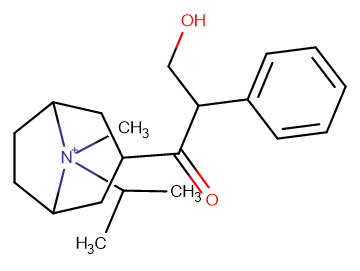
Ipratropium bromide monohydrate
CAS No. 66985-17-9
Ipratropium bromide monohydrate( —— )
Catalog No. M15559 CAS No. 66985-17-9
Ipratropium Bromide is a muscarinic antagonist, bronchodilator, N-Isopropyl salt of atropine.
Purity : >98% (HPLC)
 COA
Datasheet
HNMR
HPLC
MSDS
Handing Instructions
COA
Datasheet
HNMR
HPLC
MSDS
Handing Instructions
| Size | Price / USD | Stock | Quantity |
| 1 mL x 10 mM in DMSO | 28 | In Stock |


|
| 50MG | 31 | In Stock |
|
| 100MG | 47 | In Stock |
|
| 200MG | Get Quote | In Stock |
|
| 500MG | 91 | In Stock |
|
| 1G | 138 | In Stock |
|
Biological Information
-
Product NameIpratropium bromide monohydrate
-
NoteResearch use only, not for human use.
-
Brief DescriptionIpratropium Bromide is a muscarinic antagonist, bronchodilator, N-Isopropyl salt of atropine.
-
DescriptionIpratropium Bromide is a muscarinic antagonist, bronchodilator, N-Isopropyl salt of atropine.(In Vitro):Ipratropium bromide hydrate (1 nM, 10 nM, 100 nM; 15 min) exerts its toxic effects via disruption of mitochondrial membrane potential.Ipratropium bromide hydrate (1 nM-1 μM; 4 h) increases infarct size in isolated perfused heart ischaemia/reperfusion experiments with a dose-responsive manner (EC50=22.7 nM).Ipratropium bromide hydrate (0.001 nM-0.1 mM; 2 h) inhibits adult rat cardiac myocyte growth after 4 h hypoxia treatment.(In Vivo):Ipratropium bromide hydrate (1.0 μg/kg; i.v.; single dose) enhances vagal nerve stimulation induing bronchoconstriction.Ipratropium bromide hydrate (0.04 mg/20 mL and 0.20 mg/20 mL; inhalation for 30 min, rate=30 mL/30 min) can protect the lungs against the cadmium-induced acute neutrophilic inflammation by reducing the parenchyma inflammatory infiltration of neutrophils.
-
In VitroIpratropium bromide hydrate (1 nM, 10 nM, 100 nM; 15 min) exerts its toxic effects via disruption of mitochondrial membrane potential.Ipratropium bromide hydrate (1 nM-1 μM; 4 h) increases infarct size in isolated perfused heart ischaemia/reperfusion experiments with a dose-responsive manner (EC50=22.7 nM).Ipratropium bromide hydrate (0.001 nM-0.1 mM; 2 h) inhibits adult rat cardiac myocyte growth after 4 h hypoxia treatment. Cell Viability Assay Cell Line:Adult Rat Cardiac Myocyte Concentration:0.001 nM-0.1 mM Incubation Time:2 h in dark; prior to 4 h hypoxia Result:Resulted cell viability in a dose-dependent manner, with the inhibition rate of 52.7% at 0.1 mM dose.
-
In VivoIpratropium bromide hydrate (1.0 μg/kg; i.v.; single dose) enhances vagal nerve stimulation induing bronchoconstriction.Ipratropium bromide hydrate (0.04 mg/20 mL and 0.20 mg/20 mL; inhalation for 30 min, rate=30 mL/30 min) can protect the lungs against the cadmium-induced acute neutrophilic inflammation by reducing the parenchyma inflammatory infiltration of neutrophils. Animal Model:Guinea-pigs of the Dunkin Hartley strain Dosage:0.1-1 μg/kg Administration:Intravenous injection; single dose Result:Resulted little blocking effect on post-junctional muscarinic receptors at 0.3 μg/kg, and inhibited ACh-induced bronchoconstriction at 0.5 μg/kg.Animal Model:Male Sprague-Dawley rats (300-350 g)Dosage:0.04 mg/20 mL and 0.20 mg/20 mL Administration:Inhalation; atomization rate of 30 mL/30 min; 30 min Result:Had no significant effects on any parameters recorded in healthy rats but exerted a protective effect against the inflammatory reaction elicited by cadmium.
-
Synonyms——
-
PathwayEndocrinology/Hormones
-
TargetAChR
-
RecptormAChR
-
Research AreaInflammation/Immunology
-
Indication——
Chemical Information
-
CAS Number66985-17-9
-
Formula Weight430.38
-
Molecular FormulaC20H32BrNO4
-
Purity>98% (HPLC)
-
SolubilityDMSO, Ethanol and Water: 200 mM
-
SMILESCC(C)[N+]1(C)C2CCC1CC(C2)C(=O)C(CO)C1=CC=CC=C1
-
Chemical Name——
Shipping & Storage Information
-
Storage(-20℃)
-
ShippingWith Ice Pack
-
Stability≥ 2 years
Reference
1.Wellington K. Treat Respir Med. 2005; 4(3):215-20; discussion 221-2.
molnova catalog



related products
-
Primidone
Primidone is an anticonvulsant of the pyrimidinedione class.
-
Pempidine
Pempidine is a ganglion-blocking drug, introduced as an oral treatment for hypertension.
-
Imperatorin
Imperatorin is a modulator of p38,ERK pathway. Imperatorin increases BMP-2 expression (mRNA) and increases bone density/volume and mineralization in vivo.
