


 Cart
Cart
 sales@molnova.com



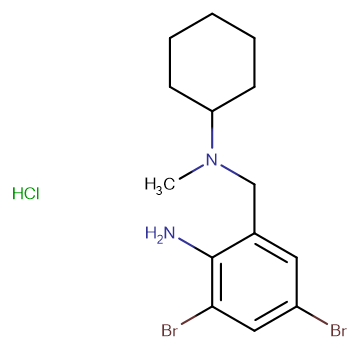
Bromhexine hydrochloride
CAS No. 611-75-6
Bromhexine hydrochloride( —— )
Catalog No. M15301 CAS No. 611-75-6
Bromhexine Hydrochloride is a medication prescribed for coughs which works by dissolving hard phlegm.
Purity : >98% (HPLC)
 COA
Datasheet
HNMR
HPLC
MSDS
Handing Instructions
COA
Datasheet
HNMR
HPLC
MSDS
Handing Instructions
| Size | Price / USD | Stock | Quantity |
| 1 mL x 10 mM in DMSO | 48 | In Stock |


|
| 100MG | Get Quote | In Stock |
|
| 200MG | 28 | In Stock |
|
| 500MG | 43 | In Stock |
|
| 1G | Get Quote | In Stock |
|
Biological Information
-
Product NameBromhexine hydrochloride
-
NoteResearch use only, not for human use.
-
Brief DescriptionBromhexine Hydrochloride is a medication prescribed for coughs which works by dissolving hard phlegm.
-
DescriptionBromhexine Hydrochloride is a medication prescribed for coughs which works by dissolving hard phlegm.(In Vitro):Bromhexine hydrochloride (BHH; 250μM; 24 hours) also significantly attenuates HGF-induced invasion of LNCaP and C4-2B cells that natively express TMPRSS2.No significant toxicity is observed over a 48-hour period exposing LNCaP, DU145, PC3, or HepG2 cells to Bromhexine hydrochloride concentrations ranging from 0μM to 250μM. Bromhexine hydrochloride exposure does not induce cell death or substantially suppress the growth of DU145 cells.Bromhexine hydrochloride (20 μM; 48 h) inhibits dendritic cells infection with HIV-1.(In Vivo):Bromhexine hydrochloride (30mg/kg; ip; three times per week for 5 weeks) significantly reduces the incidence of distant metastasis to lung and liver sites from 55% in vehicle-treated animals to 20% in Wild-type C57BL/6 and TRAMP mice with PIN (prostatic intraepithelial neoplasia). The prostate glands of the mice treated with Bromhexine hydrochloride are generally substantially larger than vehicle-treated TRAMP mice.
-
In VitroBromhexine hydrochloride (BHH; 250μM; 24 hours) also significantly attenuates HGF-induced invasion of LNCaP and C4-2B cells that natively express TMPRSS2.No significant toxicity is observed over a 48-hour period exposing LNCaP, DU145, PC3, or HepG2 cells to Bromhexine hydrochloride concentrations ranging from 0μM to 250μM. Bromhexine hydrochloride exposure does not induce cell death or substantially suppress the growth of DU145 cells. Bromhexine hydrochloride (20?μM; 48?h) inhibits dendritic cells infection with HIV-1.
-
In VivoBromhexine hydrochloride (30mg/kg; ip; three times per week for 5 weeks) significantly reduces the incidence of distant metastasis to lung and liver sites from 55% in vehicle-treated animals to 20% in Wild-type C57BL/6 and TRAMP mice with PIN (prostatic intraepithelial neoplasia). The prostate glands of the mice treated with Bromhexine hydrochloride are generally substantially larger than vehicle-treated TRAMP mice.
-
Synonyms——
-
PathwayOthers
-
TargetOther Targets
-
RecptorOthers
-
Research AreaMetabolic Disease
-
Indication——
Chemical Information
-
CAS Number611-75-6
-
Formula Weight412.59
-
Molecular FormulaC14H21Br2ClN2
-
Purity>98% (HPLC)
-
SolubilityEthanol: 5 mg/mL (12.11 mM); DMSO: 6 mg/mL (14.54 mM)
-
SMILESCl.CN(CC1=CC(Br)=CC(Br)=C1N)C1CCCCC1
-
Chemical Name——
Shipping & Storage Information
-
Storage(-20℃)
-
ShippingWith Ice Pack
-
Stability≥ 2 years
Reference
1.Prescrire Int. 2015 Apr;24(159):98.
molnova catalog



related products
-
Petunidin-3-O-galact...
Petunidin-3-O-galactoside chloride has antioxidant activity.
-
Argipressin acetate ...
Vasopressin acetate is a peptide hormone with vasoconstrictive and antidiuretic activities that binds to the vascular arginine vasopressin receptor, V1, with Kd values of 1.31 and 1.44 nM in A7r5 rat aortic smooth muscle cells and neonatal rat cardiomyocytes, respectively
-
Vanicoside B
Vanicoside B is a natural product for research related to life sciences.
