


 Cart
Cart
 sales@molnova.com



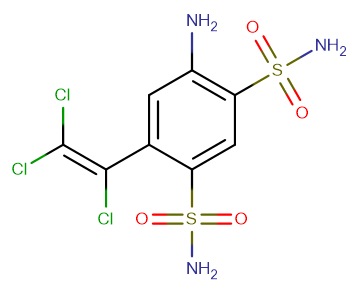
Clorsulon
CAS No. 60200-06-8
Clorsulon( —— )
Catalog No. M15244 CAS No. 60200-06-8
Clorsulon is used in the treatment of Fasciola hepatica infections in calves and sheep.
Purity : >98% (HPLC)
 COA
Datasheet
HNMR
HPLC
MSDS
Handing Instructions
COA
Datasheet
HNMR
HPLC
MSDS
Handing Instructions
| Size | Price / USD | Stock | Quantity |
| 1 mL x 10 mM in DMSO | 37 | In Stock |


|
| 100MG | 33 | In Stock |
|
| 200MG | Get Quote | In Stock |
|
| 500MG | 81 | In Stock |
|
| 1G | Get Quote | In Stock |
|
Biological Information
-
Product NameClorsulon
-
NoteResearch use only, not for human use.
-
Brief DescriptionClorsulon is used in the treatment of Fasciola hepatica infections in calves and sheep.
-
DescriptionClorsulon is used in the treatment of Fasciola hepatica infections in calves and sheep.
-
In Vitro——
-
In Vivo——
-
Synonyms——
-
PathwayOthers
-
TargetOther Targets
-
RecptorOthers
-
Research AreaInfection
-
Indication——
Chemical Information
-
CAS Number60200-06-8
-
Formula Weight380.66
-
Molecular FormulaC8H8Cl3N3O4S2
-
Purity>98% (HPLC)
-
SolubilityEthanol: 7 mg/mL (18.38 mM); DMSO: 76 mg/mL (199.65 mM)
-
SMILESNC1=C(C=C(C(=C1)C(Cl)=C(Cl)Cl)S(N)(=O)=O)S(N)(=O)=O
-
Chemical Name——
Shipping & Storage Information
-
Storage(-20℃)
-
ShippingWith Ice Pack
-
Stability≥ 2 years
Reference
1.Mrozik H, et al. J Med Chem, 1977, 20(9), 1225-1227.
molnova catalog



related products
-
Sucrose Monododecano...
Sucrose Monododecanoate is a sugar-based surfactant, which can be used as mucosal adjuvant.
-
1,3-Dihydroxy-2,7,8-...
6,8-Dihydroxy-1,2,7-trimethoxy-3-methylanthraquinone (compound 1) is an anthraquinone α-glucosidase inhibitor (IC50:185 μM), which can be isolated from Cassia seeds.
-
TDCPP
TDCPP is classified under the chlorinated trialkyl organophosphate flame retardant (OPFR) group of compounds primarily utilized as additives in commercial products.
