


 Cart
Cart
 sales@molnova.com



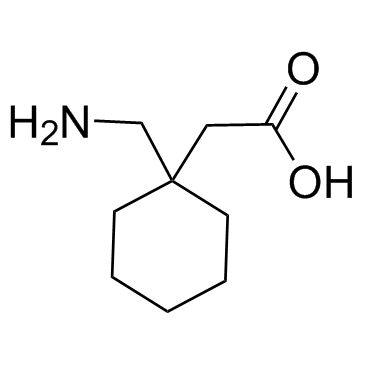
Gabapentin
CAS No. 60142-96-3
Gabapentin( CI-945? )
Catalog No. M15238 CAS No. 60142-96-3
Gabapentin (brand name Neurontin) is a medication originally developed for the treatment of epilepsy.
Purity : >98% (HPLC)
 COA
Datasheet
HNMR
HPLC
MSDS
Handing Instructions
COA
Datasheet
HNMR
HPLC
MSDS
Handing Instructions
| Size | Price / USD | Stock | Quantity |
| 25MG | 34 | In Stock |


|
| 50MG | 48 | In Stock |
|
| 100MG | 68 | In Stock |
|
| 200MG | Get Quote | In Stock |
|
| 500MG | 164 | In Stock |
|
| 1G | Get Quote | In Stock |
|
Biological Information
-
Product NameGabapentin
-
NoteResearch use only, not for human use.
-
Brief DescriptionGabapentin (brand name Neurontin) is a medication originally developed for the treatment of epilepsy.
-
DescriptionGabapentin (brand name Neurontin) is a medication originally developed for the treatment of epilepsy. Presently, gabapentin is widely used to relieve pain, especially neuropathic pain. Gabapentin is well tolerated in most patients, has a relatively mild side-effect profile, and passes through the body unmetabolized. (In Vitro):Gabapentin (0-300 μM) produces a concentration-dependent inhibition of the K+-induced [Ca2+]i increase in synaptosomes (IC50=14 μM; maximal inhibition by 36%).Gabapentin (100 μM) decreases the K+-evoked release of endogenous aspartate and glutamate in neocortical slices by 16 and 18%, respectively.Gabapentin (0-1000 μM) reduces the K+-evoked [3H]-noradrenaline release in neocortical slices (IC50=48 μM; maximal inhibition of 46%) but not from synaptosomes.(In Vivo):Gabapentin (5 and 10 mg/kg; i.p.; once; male BALB/c mice) has improving effects on spatial and emotional cognitive performance of naive mice in Morris water maze (MWM), passive avoidance (PA) and modified elevated plus maze (mEPM) tasks.Gabapentin (1-100 mg/kg; i.p.; once; male mice) has analgesic effect and reduces writhing in a dose-dependent manner.
-
In VitroGabapentin (0-300 μM) produces a concentration-dependent inhibition of the K+-induced [Ca2+]i increase in synaptosomes (IC50=14μM; maximal inhibition by 36%).Gabapentin (100μM) decreases the K+-evoked release of endogenous aspartate and glutamate in neocortical slices by 16 and 18%, respectively.?Gabapentin (0-1000 μM) reduces the K+-evoked [3H]-noradrenaline release in neocortical slices (IC50=48μM; maximal inhibition of 46%) but not from synaptosomes.
-
In VivoGabapentin (5 and 10 mg/kg; i.p.; once; male BALB/c mice) has improving effects on spatial and emotional cognitive performance of naive mice in Morris water maze (MWM), passive avoidance (PA) and modified elevated plus maze (mEPM) tasks.?Gabapentin (1-100 mg/kg; i.p.; once; male mice) has analgesic effect and reduces writhing in a dose-dependent manner. Animal Model:Male BALB/c mice (35-45 g)Dosage:5 and 10 mg/kg Administration:Intraperitoneal injection; once Result:Increased the time spent in target quadrant and decreased the distance to platform in MWM test.Decreased the transfer latency on second day in mEPM test.Prolonged retention latency in PA test.Animal Model:Male mice (26-30 g)Dosage:1, 5, 10, 50 and 100 mg/kg Administration:Intraperitoneal injection; onceResult:Produced 45-70% inhibition of writhing.
-
SynonymsCI-945?
-
PathwayEndocrinology/Hormones
-
TargetAChR
-
RecptorAdenosine receptor| Calcium Channel| BCAT
-
Research AreaNeurological Disease
-
Indication——
Chemical Information
-
CAS Number60142-96-3
-
Formula Weight171.24
-
Molecular FormulaC9H17NO2
-
Purity>98% (HPLC)
-
SolubilityWater: 34 mg/mL (198.55 mM)
-
SMILESNCC1(CC(O)=O)CCCCC1
-
Chemical Name——
Shipping & Storage Information
-
Storage(-20℃)
-
ShippingWith Ice Pack
-
Stability≥ 2 years
Reference
1.Hota D, et al. Methods Find Exp Clin Pharmacol. 2007 Sep;29(7):443-6.
molnova catalog



related products
-
Zeaxanthin
Lutein and Zeaxanthin in neural tissue may have biological effects that include antioxidation, anti-inflammation, and structural actions.
-
1-Naphthyl acetate
1-Naphthyl acetate is usually used in a rapid staining method for identification of macrophages.?
-
Proxyphylline
Proxyphylline is a dual of adenosine A1/A2a receptor inhibitor and phosphodiesterase (PDE) inhibitor. Proxyphylline acts as a cardiac stimulant vasodilator and bronchodilator.
