


 Cart
Cart
 sales@molnova.com



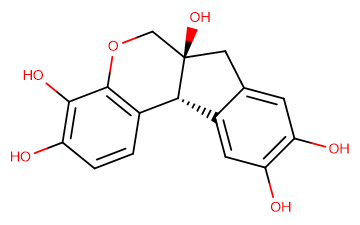
Hematoxylin
CAS No. 517-28-2
Hematoxylin( —— )
Catalog No. M14800 CAS No. 517-28-2
Hematoxylin is a natural product.
Purity : >98% (HPLC)
 COA
Datasheet
HNMR
HPLC
MSDS
Handing Instructions
COA
Datasheet
HNMR
HPLC
MSDS
Handing Instructions
| Size | Price / USD | Stock | Quantity |
| 100MG | Get Quote | In Stock |


|
| 200MG | Get Quote | In Stock |
|
| 500MG | 29 | In Stock |
|
| 1G | 37 | In Stock |
|
Biological Information
-
Product NameHematoxylin
-
NoteResearch use only, not for human use.
-
Brief DescriptionHematoxylin is a natural product.
-
DescriptionHematoxylin is a natural product.(In Vitro):When exposed to air, Hematoxylin is oxidized to reddish brown hematein. When oxidized to its hematein form and combined with a mordant, usually a metal salt, Hematoxylin stains tissue sections a deep blue to black color depending on the staining method. By itself, Hematoxylin is also amphoteric in its hematein form; it is red at acid pH and blue at alkaline pH. Differentiation following Hematoxylin staining removes nonspecific staining.Hematoxylin treatment greatly alleviates Aβ42-induced cytotoxicity in SH-SY5Y cells. Hematoxylin is a potential agent against Aβ fibrillogenesis and cytotoxicity.The Hematoxylin and Eosin (H&E) stained tissue section is the cornerstone of anatomical pathology diagnosis. The H&E procedure stains the nucleus and cytoplasm contrasting colors to readily differentiate cellular components.
-
In VitroWhen exposed to air, Hematoxylin is oxidized to reddish brown hematein. When oxidized to its hematein form and combined with a mordant, usually a metal salt, Hematoxylin stains tissue sections a deep blue to black color depending on the staining method. By itself, Hematoxylin is also amphoteric in its hematein form; it is red at acid pH and blue at alkaline pH. Differentiation following Hematoxylin staining removes nonspecific staining. Hematoxylin treatment greatly alleviates Aβ42-induced cytotoxicity in SH-SY5Y cells. Hematoxylin is a potential agent against Aβ fibrillogenesis and cytotoxicity.The Hematoxylin and Eosin (H&E) stained tissue section is the cornerstone of anatomical pathology diagnosis. The H&E procedure stains the nucleus and cytoplasm contrasting colors to readily differentiate cellular components.
-
In Vivo——
-
Synonyms——
-
PathwayOthers
-
TargetOther Targets
-
RecptorOthers
-
Research AreaOther Indications
-
Indication——
Chemical Information
-
CAS Number517-28-2
-
Formula Weight302.28
-
Molecular FormulaC16H14O6
-
Purity>98% (HPLC)
-
SolubilityEthanol: 61 mg/mL (201.79 mM); Water: 61 mg/mL (201.79 mM); DMSO: 61 mg/mL (201.79 mM)
-
SMILESC1C2=CC(=C(C=C2[C@H]3[C@@]1(COC4=C3C=CC(=C4O)O)O)O)O
-
Chemical Name——
Shipping & Storage Information
-
Storage(-20℃)
-
ShippingWith Ice Pack
-
Stability≥ 2 years
Reference
1.Papa FR, et al. Science. 2003 Nov 28;302(5650):1533-7.
molnova catalog



related products
-
Enprofylline
Enprofylline, a bronchodilator, acts primarily as a competitive nonselective phosphodiesterase inhibitor.
-
Aficamten
Aficamten is a Next-Generation Cardiac Myosin Inhibitor for the Treatment of Hypertrophic Cardiomyopathy.
-
Neurokinin A(4-10) T...
Neurokinin A (4-10) TFA is a tachykinin NK2 receptor agonist.
