


 Cart
Cart
 sales@molnova.com



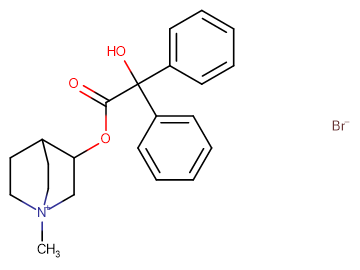
Clidinium bromide
CAS No. 3485-62-9
Clidinium bromide( Ro 2-3773 )
Catalog No. M14193 CAS No. 3485-62-9
Clidinium is a synthetic anticholinergic agent which has been shown in experimental and clinical studies to have a pronounced antispasmodic and antisecretory effect on the gastrointestinal tract.
Purity : >98% (HPLC)
 COA
Datasheet
HNMR
HPLC
MSDS
Handing Instructions
COA
Datasheet
HNMR
HPLC
MSDS
Handing Instructions
| Size | Price / USD | Stock | Quantity |
| 1 mL x 10 mM in DMSO | 34 | In Stock |


|
| 100MG | 31 | In Stock |
|
| 200MG | Get Quote | In Stock |
|
| 500MG | 69 | In Stock |
|
| 1G | Get Quote | In Stock |
|
Biological Information
-
Product NameClidinium bromide
-
NoteResearch use only, not for human use.
-
Brief DescriptionClidinium is a synthetic anticholinergic agent which has been shown in experimental and clinical studies to have a pronounced antispasmodic and antisecretory effect on the gastrointestinal tract.
-
DescriptionClidinium is a synthetic anticholinergic agent which has been shown in experimental and clinical studies to have a pronounced antispasmodic and antisecretory effect on the gastrointestinal tract. It inhibits muscarinic actions of acetylcholine at postganglionic parasympathetic neuroeffector sites. It is used for the treatment of peptic ulcer disease and also to help relieve abdominal or stomach spasms or cramps due to colicky abdominal pain, diverticulitis, and irritable bowel syndrome. (In Vivo):Clidinium (oral gavage; 0.25, 0.5, and 1 mg/kg; 3 days) causes constipation in mice. It leads to a significant decrease in %transit after clidinium treatment [(F(3, 28)=27.405] in mice.Clidinium (oral gavage; 0.25, 0.5, and 1 mg/kg; 3 days) has a significant effect on the clonic seizure threshold induced by intravenous PTZ which received clidinium (0.25, 0.5, and 1 mg/kg) [(F(3, 35) = 14.103].
-
In Vitro——
-
In VivoClidinium (oral gavage; 0.25, 0.5, and 1 mg/kg; 3 days) causes constipation in mice. It leads to a significant decrease in %transit after clidinium treatment [(F(3, 28)=27.405] in mice.Clidinium (oral gavage; 0.25, 0.5, and 1 mg/kg; 3 days) has a significant effect on the clonic seizure threshold induced by intravenous PTZ which received clidinium (0.25, 0.5, and 1 mg/kg) [(F(3, 35) = 14.103]. Animal Model:Male NMRI mice weighing 20-25 g Dosage:0.25, 0.5, and 1 mg/kg Administration:Oral gavage; 0.25, 0.5, and 1 mg/kg; 3 days Result:Decreased the clonic seizure latency compared with control animals.
-
SynonymsRo 2-3773
-
PathwayEndocrinology/Hormones
-
TargetAChR
-
RecptormAChR
-
Research AreaNeurological Disease
-
Indication——
Chemical Information
-
CAS Number3485-62-9
-
Formula Weight432.35
-
Molecular FormulaC22H26BrNO3
-
Purity>98% (HPLC)
-
SolubilityDMSO: 10 mM
-
SMILESC[N+]12CCC(CC1)C(C2)OC(=O)C(C3=CC=CC=C3)(C4=CC=CC=C4)O.[Br-]
-
Chemical Name(1-methyl-1-azoniabicyclo[2.2.2]octan-3-yl) 2-hydroxy-2,2-diphenylacetate;bromide
Shipping & Storage Information
-
Storage(-20℃)
-
ShippingWith Ice Pack
-
Stability≥ 2 years
Reference
1.Pathak A, et al. J Chromatogr Sci. 2010 Mar;48(3):235-9.
molnova catalog



related products
-
Dichlorisone Acetate
It belongs to organophosphate compounds, used as a kind of common environmental health insecticide.
-
Trospium chloride
Trospium is a urinary antispasmodic.
-
Pancuronium bromide
Pancuronium dibromide is a competitive AChR antagonist (IC50 = 5.5 nM) and acts as a skeletal muscle relaxant.
