


 Cart
Cart
 sales@molnova.com



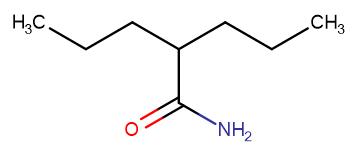
Valpramide
CAS No. 2430-27-5
Valpramide( Valpromide | Depamide )
Catalog No. M13702 CAS No. 2430-27-5
Valpromide is a carboxamide derivative of valproic acid used in the treatment of epilepsy and some affective disorders.
Purity : >98% (HPLC)
 COA
Datasheet
HNMR
HPLC
MSDS
Handing Instructions
COA
Datasheet
HNMR
HPLC
MSDS
Handing Instructions
| Size | Price / USD | Stock | Quantity |
| 1 mL x 10 mM in DMSO | 29 | In Stock |


|
| 50MG | 28 | In Stock |
|
| 100MG | 41 | In Stock |
|
| 200MG | Get Quote | In Stock |
|
| 500MG | 91 | In Stock |
|
| 1G | 138 | In Stock |
|
Biological Information
-
Product NameValpramide
-
NoteResearch use only, not for human use.
-
Brief DescriptionValpromide is a carboxamide derivative of valproic acid used in the treatment of epilepsy and some affective disorders.
-
DescriptionValpromide is a carboxamide derivative of valproic acid used in the treatment of epilepsy and some affective disorders.
-
In Vitro——
-
In Vivo——
-
SynonymsValpromide | Depamide
-
PathwayOthers
-
TargetOther Targets
-
Recptor2-epoxide hydrolase| Limonene-1
-
Research Area——
-
Indication——
Chemical Information
-
CAS Number2430-27-5
-
Formula Weight143.23
-
Molecular FormulaC8H17NO
-
Purity>98% (HPLC)
-
SolubilityDMSO: 10 mM
-
SMILESCCCC(CCC)C(N)=O
-
Chemical Name2-propylpentanamide
Shipping & Storage Information
-
Storage(-20℃)
-
ShippingWith Ice Pack
-
Stability≥ 2 years
Reference
1.Lemoine P, et al. Eur Psychiatry. 2000 Nov;15(7):424-32.
molnova catalog



related products
-
Obestatin, rat, mous...
Obestatin, rat, mouse
-
Kinase Domain of Ins...
Kinase Domain of Insulin Receptor (4)
-
Atrial Natriuretic F...
Anaritide is a synthetic form of atrial natriuretic peptide (ANP) composed of 25 amino acids. Anaritide increases glomerular filtration rate by dilating into and contracting out the bulbar arterioles. Anaritide can be used to study the effects on patients with acute tubular necrosis, particularly in improving dialysis free survival.
