


 Cart
Cart
 sales@molnova.com



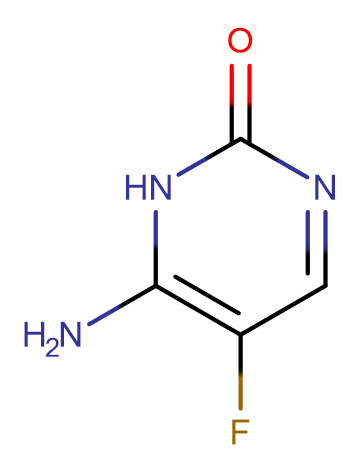
Fluorocytosine
CAS No. 2022-85-7
Fluorocytosine( Ancobon | Ancotil | 5-FC | NSC 103805 | Ro 2-9915 )
Catalog No. M13149 CAS No. 2022-85-7
Flucytosine is a Nucleoside Analog Antifungal. The chemical classification of flucytosine is Nucleoside Analog.
Purity : >98% (HPLC)
 COA
Datasheet
HNMR
HPLC
MSDS
Handing Instructions
COA
Datasheet
HNMR
HPLC
MSDS
Handing Instructions
| Size | Price / USD | Stock | Quantity |
| 1 mL x 10 mM in DMSO | 46 | In Stock |


|
| 100MG | Get Quote | In Stock |
|
| 200MG | Get Quote | In Stock |
|
| 500MG | 33 | In Stock |
|
| 1G | 45 | In Stock |
|
Biological Information
-
Product NameFluorocytosine
-
NoteResearch use only, not for human use.
-
Brief DescriptionFlucytosine is a Nucleoside Analog Antifungal. The chemical classification of flucytosine is Nucleoside Analog.
-
DescriptionFlucytosine is a Nucleoside Analog Antifungal. The chemical classification of flucytosine is Nucleoside Analog.
-
In Vitro——
-
In Vivo——
-
SynonymsAncobon | Ancotil | 5-FC | NSC 103805 | Ro 2-9915
-
PathwayCell Cycle/DNA Damage
-
TargetDNA/RNA Synthesis
-
RecptorDNA synthesis
-
Research AreaInfection
-
Indication——
Chemical Information
-
CAS Number2022-85-7
-
Formula Weight129.09
-
Molecular FormulaC4H4FN3O
-
Purity>98% (HPLC)
-
SolubilityWater: 5 mg/mL (38.73 mM); DMSO: 8 mg/mL (61.97 mM)
-
SMILESO=C1N=CC(F)=C(N)N1
-
Chemical Name6-amino-5-fluoro-1H-pyrimidin-2-one
Shipping & Storage Information
-
Storage(-20℃)
-
ShippingWith Ice Pack
-
Stability≥ 2 years
Reference
1.Osterman DG, et al. Biochemistry. 1988 Jul 12;27(14):5204-10.
molnova catalog



related products
-
Mefenidil
Mefenidil (McN-2378), a selective cerebral vasodilator, was shown to increase CBF in healthy brains without stimulating O2 uptake in a dog anesthesia model.
-
2-Fluoroadenine
2-Fluoroadenine has toxicity in nonproliferating and proliferating tumor cells. 2-Fluoroadenine can be used for anticancer studies.
-
DY-46-2
DY-46-2 is a selective non-nucleoside DNA methyltransferase 3A (DNMT3A) inhibitor (IC50: 0.39 ± 0.23 μM) with anticancer activity for the study of cancer and tumors.
