


 Cart
Cart
 sales@molnova.com



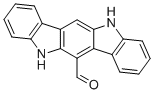
FICZ
CAS No. 172922-91-7
FICZ( FICZ )
Catalog No. M12626 CAS No. 172922-91-7
FICZ is a high affinity aryl hydrocarbon receptor (AhR) agonist with Kd of 70 pM.
Purity : >98% (HPLC)
 COA
Datasheet
HNMR
HPLC
MSDS
Handing Instructions
COA
Datasheet
HNMR
HPLC
MSDS
Handing Instructions
| Size | Price / USD | Stock | Quantity |
| 1 mL x 10 mM in DMSO | 136 | In Stock |


|
| 5MG | 88 | In Stock |
|
| 10MG | 133 | In Stock |
|
| 25MG | 261 | In Stock |
|
| 50MG | 433 | In Stock |
|
| 100MG | 612 | In Stock |
|
| 200MG | 872 | In Stock |
|
| 500MG | Get Quote | In Stock |
|
| 1G | Get Quote | In Stock |
|
Biological Information
-
Product NameFICZ
-
NoteResearch use only, not for human use.
-
Brief DescriptionFICZ is a high affinity aryl hydrocarbon receptor (AhR) agonist with Kd of 70 pM.
-
DescriptionFICZ is a high affinity aryl hydrocarbon receptor (AhR) agonist with Kd of 70 pM; induces transient expression of CYP1A1 in vitro, and potentiates NK cell IFN-γ production and cytolytic activity; enhances NK cell control of tumors in an NK cell- and AhR-dependent manner in vivo; an endogenous AhR ligand.
-
In VitroFICZ (0.01 nM-1 μM) alone or in combination with 50 nM MNF induces sustained CYP1A1 activity and leads to oxidative stress and activation of apoptosis via a mitochondrial-dependent pathway. In HepG2 cells, FICZ stimulates cell growth at low concentrations but inhibits cell growth at high concentrations. FICZ (10,000-30,000 nM) significantly decreases CEH viability with an estimated LC50 (95% confidence intervals) of 14,000 nM. FICZ shows concentration-dependent effects on EROD activity in CEH cultures, with the mean EC50 values at 3, 8, and 24 h of 0.016 nM, 0.80 nM, and 11 nM, respectively. FICZ treatment increases transcript expression of CYP1A1 in a dose-dependent manner in both the parental iPSC line and the CYP1A1 targeted clone. CYP1 inhibition in the presence of FICZ results in enhanced AHR activation, suggesting that FICZ accumulates in the cell when its metabolism is blocked. CYP1 enzymes plays a role in regulating biological effects of FICZ.Nuclear export and degradation of the AHR protein are two additional steps in the AHR-mediated signal transduction pathway.Exposure to AhR agonists causes AhR-expressing cells to downregulate the receptor through the ubiquitin/proteasome degradation pathway.
-
In Vivo——
-
SynonymsFICZ
-
PathwayEndocrinology/Hormones
-
TargetAhR
-
RecptorAhR
-
Research AreaOther Indications
-
Indication——
Chemical Information
-
CAS Number172922-91-7
-
Formula Weight284.31
-
Molecular FormulaC19H12N2O
-
Purity>98% (HPLC)
-
SolubilityDMSO : 10 mg/mL 35.17 mM
-
SMILESO=CC(C1=NC2=CC=CC=C2C1=C3)=C4C3=NC5=CC=CC=C54
-
Chemical Name5,11-dihydro-indolo[3,2-b]carbazole-6-carboxaldehyde
Shipping & Storage Information
-
Storage(-20℃)
-
ShippingWith Ice Pack
-
Stability≥ 2 years
Reference
1. Rannug U, et al. Chem Biol. 1995 Dec;2(12):841-5.
2. Wincent E, et al. J Biol Chem. 2009 Jan 30;284(5):2690-6.
3. Shin JH, et al. Proc Natl Acad Sci U S A. 2013 Jul 23;110(30):12391-6.
molnova catalog



related products
-
YL-109
YL-109 is a novel anticancer agent which has ability to inhibit breast Y cell growth and invasiveness in vitro and in vivo.
-
PDM 11
PDM 11 is an antagonist of aryl hydrocarbon receptor (AhR).
-
TCDD
A potent AHR (aryl hydrocarbon receptor) agonist that induces degradation of AhR by the ubiquitin-proteasome pathway.
