


 Cart
Cart
 sales@molnova.com



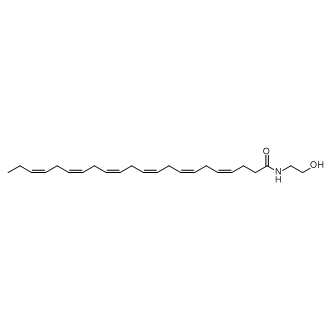
Synaptamide
CAS No. 162758-94-3
Synaptamide( Docosahexaenoyl ethanolamide )
Catalog No. M12411 CAS No. 162758-94-3
An endogenous DHA metabolite that promotes neurite growth, synaptogenesis, and synaptic function both in vitro and in vivo.
Purity : >98% (HPLC)
 COA
Datasheet
HNMR
HPLC
MSDS
Handing Instructions
COA
Datasheet
HNMR
HPLC
MSDS
Handing Instructions
| Size | Price / USD | Stock | Quantity |
| 100MG | Get Quote | Get Quote |


|
| 200MG | Get Quote | Get Quote |
|
| 500MG | Get Quote | Get Quote |
|
| 1G | Get Quote | Get Quote |
|
Biological Information
-
Product NameSynaptamide
-
NoteResearch use only, not for human use.
-
Brief DescriptionAn endogenous DHA metabolite that promotes neurite growth, synaptogenesis, and synaptic function both in vitro and in vivo.
-
DescriptionAn endogenous DHA metabolite that promotes neurite growth, synaptogenesis, and synaptic function both in vitro and in vivo; significantly increased the number of MAP2 and Tuj-1-positive neurons with concomitant induction of PKA/CREB phosphorylation at low nM; induces neuronal differentiation of NSCs.
-
In VitroSynaptamide (Dehydroepiandrosteron; DHEA) is a weak agonist at both CB1 and CB2 receptors.
-
In VivoSynaptamide (10 mg/kg; subcutaneously; daily for 7 days) promotes cognitive recovery in rats subjected to mild traumatic brain injury (mTBI).Synaptamide (2-10 mg/kg; adult male C57BL/6J mice) reduced the levels of nociceptive and inflammatory pain-related behaviour over 60 min in the intraplantar formaldehyde assay via both intraperitoneal and local intraplantar administration. Animal Model:Male Wistar rats;260?±?20 g, age 3 months; mTBI model)Dosage:10 mg/kg Administration:Subcutaneously; daily for 7 days Result:Reversed the mTBI-induced cognitive deficits.
-
SynonymsDocosahexaenoyl ethanolamide
-
PathwayApoptosis
-
TargetPKA
-
RecptorPKA
-
Research AreaNeurological Disease
-
Indication——
Chemical Information
-
CAS Number162758-94-3
-
Formula Weight371.5561
-
Molecular FormulaC24H37NO2
-
Purity>98% (HPLC)
-
Solubility10 mM in DMSO; Ethanol: 25 mg/mL
-
SMILESCCC=CCC=CCC=CCC=CCC=CCC=CCCC(=O)NCCO
-
Chemical Name4,7,10,13,16,19-Docosahexaenamide, N-(2-hydroxyethyl)-, (4Z,7Z,10Z,13Z,16Z,19Z)-
Shipping & Storage Information
-
Storage(-20℃)
-
ShippingWith Ice Pack
-
Stability≥ 2 years
Reference
1. Rashid MA, et al. J Neurochem. 2013 Jun;125(6):869-84.
2. Kim HY, et al. Prostaglandins Other Lipid Mediat. 2011 Nov;96(1-4):114-20.
3. Rashid MA, et al. Neuropharmacology. 2016 Mar;102:174-85.
molnova catalog



related products
-
Fasudil (HA-1077) hy...
Fasudil hydrochloride(HA-1077; AT-877) is a potent inhibitor of ROCK-II, PKA, PKG, PKC, and MLCK.
-
Hydroxyfasudil
Hydroxyfasudil is a ROCK inhibitor(IC50s of 0.73 and 0.72 μM for ROCK1 and ROCK2, respectively).
-
7-Ethylcamptothecin
7-Ethylcamptothecin remains in the intestinal tract for a longer time and in higher amounts when administered in vivo.
