


 Cart
Cart
 sales@molnova.com



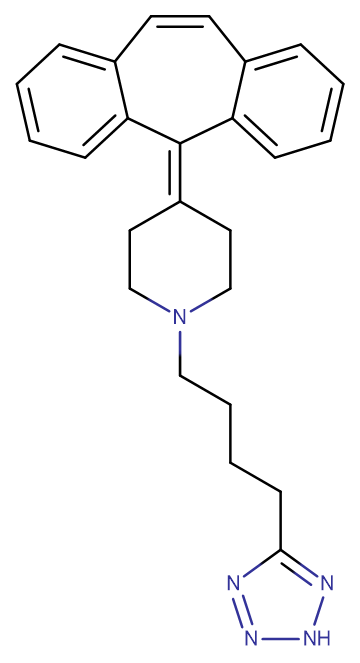
AT-56
CAS No. 162640-98-4
AT-56( AT-56 | AT 56 | AT56 )
Catalog No. M12406 CAS No. 162640-98-4
AT56, a specific inhibitor of prostaglandin D2 synthase enzymatic activity, blunted adipogenic aldosterone effects.
Purity : >98% (HPLC)
 COA
Datasheet
HNMR
HPLC
MSDS
Handing Instructions
COA
Datasheet
HNMR
HPLC
MSDS
Handing Instructions
| Size | Price / USD | Stock | Quantity |
| 1 mL x 10 mM in DMSO | 80 | In Stock |


|
| 5MG | 72 | In Stock |
|
| 10MG | 122 | In Stock |
|
| 25MG | 239 | In Stock |
|
| 50MG | 390 | In Stock |
|
| 100MG | 616 | In Stock |
|
| 200MG | 861 | In Stock |
|
| 500MG | Get Quote | In Stock |
|
| 1G | Get Quote | In Stock |
|
Biological Information
-
Product NameAT-56
-
NoteResearch use only, not for human use.
-
Brief DescriptionAT56, a specific inhibitor of prostaglandin D2 synthase enzymatic activity, blunted adipogenic aldosterone effects.
-
DescriptionAT56, a specific inhibitor of prostaglandin D2 synthase enzymatic activity, blunted adipogenic aldosterone effects.
-
In VitroAT-56 (1-30 μM; 10 minutes) dose-dependently inhibits the production of PGD2 in L-PGDS-expressing human medulloblastoma TE-671 cells with an IC50 of about 3 μM.
-
In VivoAT-56 (?1-30 mg/kg; p.o.) suppresses the PGD2 production in the stab-wounded brain.AT-56 (1-10 mg/kg; p.o.) suppresses the L-PGDS-mediated allergic airway inflammation in mice.AT-56 (10 mg/kg; p.o.) exhibits Cmax (2.15 μg/ml), half-life (1.71 h) and high oral bioavailability (82%). Animal Model:H-PGDS KO mice (14-16weeks, 25-30 g, C57BL/6 strain) with a stab wound brain injuryDosage:0, 1, 3, 10, 30?mg/kg Administration:P.o. 1 h before the stab wound injury Result:Inhibited the L-PGDS reaction in the brain.Decreased the total amount of PGD2 in the brain to 40% with 30 mg/kg AT-56.Animal Model:Human L-PGDS-overexpressing TG mice (males, 14-16 weeks, 25-30 g)Dosage:?0, 1, 10 mg/kg Administration:P.o. 1 h before and 24 h after the antigen exposure Result:Prevented the eosinophil infiltration by inhibiting transgened human L-PGDS.Animal Model:Male C57BL/6 mice (7 weeks, 22-26 g) Dosage:10?mg/kg for p.o. and 2 mg/kg for i.v. (Pharmacokinetic Analysis)Administration:P.o. and i.v. administration Result:Oral bioavailability (82%); Cmax (2.15 μg/ml); T1/2 (1.71 h, p.o.); T1/2 (2.35 h, i.v.).
-
SynonymsAT-56 | AT 56 | AT56
-
PathwayOthers
-
TargetOther Targets
-
RecptorL-PGDS
-
Research Area——
-
Indication——
Chemical Information
-
CAS Number162640-98-4
-
Formula Weight397.52
-
Molecular FormulaC25H27N5
-
Purity>98% (HPLC)
-
SolubilityDMSO: > 10 mM
-
SMILESN1(CCCCC2=NNN=N2)CC/C(CC1)=C3C4=CC=CC=C4C=CC5=CC=CC=C/35
-
Chemical Name4-(5H-dibenzo[a,d]cyclohepten-5-ylidene)-1-[4-(2H-tetrazol-5-yl)butyl]-piperidine
Shipping & Storage Information
-
Storage(-20℃)
-
ShippingWith Ice Pack
-
Stability≥ 2 years
Reference
1.Urbanet R, et al. Hypertension. 2015 Jul;66(1):149-57.
molnova catalog



related products
-
Epicatechin 3-O-(4-O...
Epicatechin 3-O-(4-O-methylgallate)
-
Sinalbin
The seeds of Sinapis alba L.
-
Procyanidin A4
Proanthocyanidin A4 (Standard) is the analytical standard of Proanthocyanidin A4. This product is intended for research and analytical applications. Proanthocyanidin A4 is a polyphenol found in a variety of plants. Proanthocyanidin A4 possesses anti-inflammatory effects.
