


 Cart
Cart
 sales@molnova.com



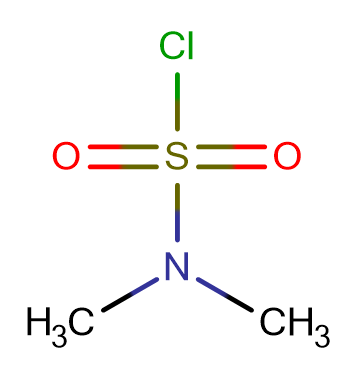
Dimethylsulfamoyl chloride
CAS No. 13360-57-1
Dimethylsulfamoyl chloride( —— )
Catalog No. M11344 CAS No. 13360-57-1
Dimethylsulfamoyl Chloride is a kind of small molecular compounds with fomula C2H6ClNO2S.
Purity : >98% (HPLC)
 COA
Datasheet
HNMR
HPLC
MSDS
Handing Instructions
COA
Datasheet
HNMR
HPLC
MSDS
Handing Instructions
| Size | Price / USD | Stock | Quantity |
| 1 mL x 10 mM in DMSO | 28 | In Stock |


|
| 50MG | 43 | In Stock |
|
| 100MG | 56 | In Stock |
|
| 200MG | Get Quote | In Stock |
|
| 500MG | 128 | In Stock |
|
| 1G | 184 | In Stock |
|
Biological Information
-
Product NameDimethylsulfamoyl chloride
-
NoteResearch use only, not for human use.
-
Brief DescriptionDimethylsulfamoyl Chloride is a kind of small molecular compounds with fomula C2H6ClNO2S.
-
DescriptionDimethylsulfamoyl Chloride is a kind of small molecular compounds with fomula C2H6ClNO2S.
-
In Vitro——
-
In Vivo——
-
Synonyms——
-
PathwayOthers
-
TargetOther Targets
-
RecptorOthers
-
Research Area——
-
Indication——
Chemical Information
-
CAS Number13360-57-1
-
Formula Weight143.59
-
Molecular FormulaC2H6ClNO2S
-
Purity>98% (HPLC)
-
SolubilityLimited solubility
-
SMILESCN(C)S(Cl)(=O)=O
-
Chemical Name——
Shipping & Storage Information
-
Storage(-20℃)
-
ShippingWith Ice Pack
-
Stability≥ 2 years
Reference
1. Kevill DN, et al. Org Biomol Chem. 2006 Apr 21;4(8):1580-6.
molnova catalog



related products
-
5-amino-1-[4-(triflu...
5-amino-1-[4-(trifluoromethyl)phenyl]-1H-pyrazole-4-carbonitrile is a compound used as a molecular building block.
-
[Pro3]-GIP (Mouse)
GIP receptor antagonist (IC50 = 2.6μM). Inhibits GIP-stimulated insulin release from pancreatic β cells in vitro. In ob/ob mice, blocks the effects of GIP on insulin release and plasma glucose levels. Also improves intraperitoneal glucose tolerance, insulin sensitivity, and glucose response to feeding in ob/ob mice.
-
SM-102
SM-102 is an ionizable amino lipid that can be used for the formation of lipid nanoparticles (LNPs). SM-102 has the potential for development of lipid nanoparticles for delivery of mRNA-based vaccines.
