


 Cart
Cart
 sales@molnova.com



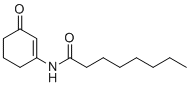
J8-C8
CAS No. 1150565-77-7
J8-C8( acyl-HSLs inhibitor J8-C8 )
Catalog No. M10530 CAS No. 1150565-77-7
J8-C8 is a small-molecule inhibitor of bacterial N-acyl-homoserine lactone synthase (acyl-HSLs) TofI with IC50 of 35 uM for toxoflavin production.
Purity : >98% (HPLC)
 COA
Datasheet
HNMR
HPLC
MSDS
Handing Instructions
COA
Datasheet
HNMR
HPLC
MSDS
Handing Instructions
| Size | Price / USD | Stock | Quantity |
| 100MG | Get Quote | Get Quote |


|
| 200MG | Get Quote | Get Quote |
|
| 500MG | Get Quote | Get Quote |
|
| 1G | Get Quote | Get Quote |
|
Biological Information
-
Product NameJ8-C8
-
NoteResearch use only, not for human use.
-
Brief DescriptionJ8-C8 is a small-molecule inhibitor of bacterial N-acyl-homoserine lactone synthase (acyl-HSLs) TofI with IC50 of 35 uM for toxoflavin production.
-
DescriptionJ8-C8 is a small-molecule inhibitor of bacterial N-acyl-homoserine lactone synthase (acyl-HSLs) TofI with IC50 of 35 uM for toxoflavin production; inhibits C8-HSL synthesis in a dose-dependent manner; a new class of quorum sensing (QS)-inhibiting therapeutic agents.
-
In Vitro——
-
In Vivo——
-
Synonymsacyl-HSLs inhibitor J8-C8
-
PathwayGPCR/G Protein
-
TargetAntibacterial
-
RecptorAntibacterial
-
Research Area——
-
Indication——
Chemical Information
-
CAS Number1150565-77-7
-
Formula Weight237.343
-
Molecular FormulaC14H23NO2
-
Purity>98% (HPLC)
-
Solubility——
-
SMILES——
-
Chemical NameN-(3-oxocyclohex-1-en-1-yl)octanamide
Shipping & Storage Information
-
Storage(-20℃)
-
ShippingWith Ice Pack
-
Stability≥ 2 years
Reference
1. Chung J, et al. Proc Natl Acad Sci U S A. 2011 Jul 19;108(29):12089-94.
molnova catalog



related products
-
Chloramphenicol palm...
Chloramphenicol palmitate is a broad-spectrum antibiotic with activity against gram-positive and gram-negative bacteria.
-
Baptifoline
Baptifoline is an alkaloid isolated from Anagyris foetida with potential antibacterial activity.
-
Faropenem sodium
Faropenem sodium is an orally bioavailable penem antibiotic which can efficiently kill Mycobacterium tuberculosis.It treatment of tuberculosis and community-acquired pneumonia.
