


 Cart
Cart
 sales@molnova.com



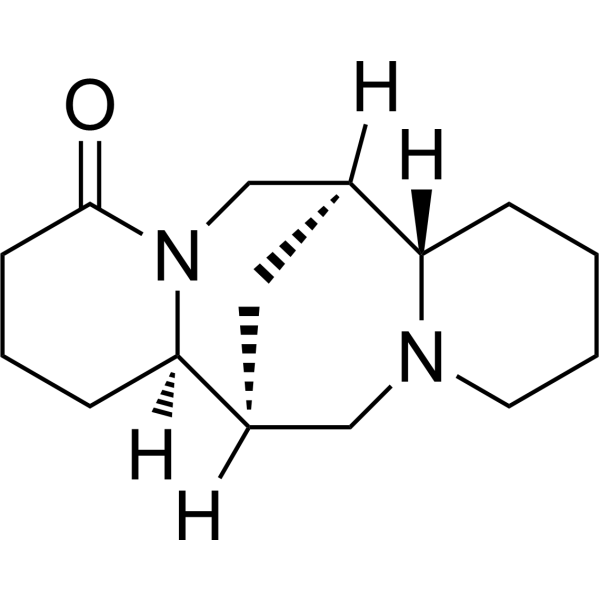
Lupanine
CAS No. 550-90-3
Lupanine( —— )
Catalog No. M30999 CAS No. 550-90-3
Lupanine has a weak sedative effect on the central nervous system, interaction with specific drugs used for treatment of the CNS and for analgesic activity. Lupanine improves glucose homeostasis by influencing KATP-channels of pancreatic beta cells.
Purity : >98% (HPLC)
 COA
Datasheet
HNMR
HPLC
MSDS
Handing Instructions
COA
Datasheet
HNMR
HPLC
MSDS
Handing Instructions
| Size | Price / USD | Stock | Quantity |
| 5MG | 537 | In Stock |


|
| 50MG | Get Quote | In Stock |
|
| 100MG | Get Quote | In Stock |
|
Biological Information
-
Product NameLupanine
-
NoteResearch use only, not for human use.
-
Brief DescriptionLupanine has a weak sedative effect on the central nervous system, interaction with specific drugs used for treatment of the CNS and for analgesic activity. Lupanine improves glucose homeostasis by influencing KATP-channels of pancreatic beta cells.
-
DescriptionLupanine has a weak sedative effect on the central nervous system, interaction with specific drugs used for treatment of the CNS and for analgesic activity. Lupanine improves glucose homeostasis by influencing KATP-channels of pancreatic beta cells.
-
In Vitro——
-
In Vivo——
-
Synonyms——
-
PathwayOthers
-
TargetOther Targets
-
Recptor——
-
Research Area——
-
Indication——
Chemical Information
-
CAS Number550-90-3
-
Formula Weight248.4
-
Molecular FormulaC15H24N2O
-
Purity>98% (HPLC)
-
Solubility——
-
SMILES——
-
Chemical Name——
Shipping & Storage Information
-
Storage(-20℃)
-
ShippingWith Ice Pack
-
Stability≥ 2 years
Reference
molnova catalog



related products
-
Higenamine?Hydrochlo...
Higenamine(Hydrochloride) has been demonstrated to be a?β2?adrenoreceptor agonist.
-
D3-βArr
D3-βArr is a positive allosteric modulator for thyrotropin receptor (TSHR) which initiates translocation of β-Arr 1 (EC50: 11.6 μM) by direct TSHR activation.
-
D-Arabitol
D-Arabitol is a polyol. Polyols are sugar alcohols linked to the pentose phosphate pathway (PPP). Polyols occur in body fluids. It is thought that D-arabitol is a metabolic end-product in humans.
