


 Cart
Cart
 sales@molnova.com



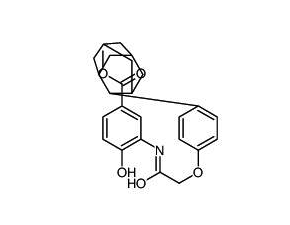
LW6
CAS No. 934593-90-5
LW6( CAY10585 | CAY-10585 | CAY 10585 | LW6 )
Catalog No. M17673 CAS No. 934593-90-5
LW6 is a novel HIF-1 inhibitor.
Purity : >98% (HPLC)
 COA
Datasheet
HNMR
HPLC
MSDS
Handing Instructions
COA
Datasheet
HNMR
HPLC
MSDS
Handing Instructions
| Size | Price / USD | Stock | Quantity |
| 2MG | 35 | In Stock |


|
| 5MG | 57 | In Stock |
|
| 10MG | 82 | In Stock |
|
| 25MG | 174 | In Stock |
|
| 50MG | 282 | In Stock |
|
| 100MG | 425 | In Stock |
|
| 500MG | 888 | In Stock |
|
| 1G | Get Quote | In Stock |
|
Biological Information
-
Product NameLW6
-
NoteResearch use only, not for human use.
-
Brief DescriptionLW6 is a novel HIF-1 inhibitor.
-
DescriptionCAY10585, also known as LW6, was first identified and reported by a group scientists from Korea. LW8 was found to inhibits the accumulation of HIF-1alpha. LW6 decreased HIF-1alpha protein expression without affecting HIF-1beta expression. It was further found that LW8 promoted the degradation of wild type HIF-1alpha, but not of a DM-HIF-1alpha with modifications of P402A and P564A, at hydroxylation sites in the oxygen-dependent degradation domain (ODDD). LW6 did not affect the activity of prolyl hydroxylase (PHD), but induced the expression of von Hippel-Lindau (VHL), which interacts with prolyl-hydroxylated HIF-1alpha for proteasomal degradation. In the presence of LW8, knockdown of VHL did not abolish HIF-1alpha protein accumulation, indicating that LW8 degraded HIF-1alpha via regulation of VHL expression. In mice carrying xenografts of human colon cancer HCT116 cells, LW8 demonstrated strong anti-tumor efficacy in vivo and caused a decrease in HIF-1alpha expression in frozen-tissue immunohistochemical staining. These data suggest that LW8 may be valuable in the development of a HIF-1alpha inhibitor for cancer treatment.
-
In VitroLW6 affects the stability of the HIF-1α protein. LW6 promotes the degradation of wild type HIF-1α, but not of a DM-HIF-1α with modifications of P402A and P564A, at hydroxylation sites in the oxygen-dependent degradation domain. LW6 induces the expression of von Hippel-Lindau (VHL), which interacts with prolyl-hydroxylated HIF-1α for proteasomal degradation. In the presence of LW6, knockdown of VHL does not abolish HIF-1α protein accumulation, indicating that LW6 degraded HIF-1α via regulation of VHL expression. In MDCKII-BCRP cells overexpressing BCRP, LW6 enhances significantly the cellular accumulation of mitoxantrone, a BCRP substrate. LW6 also down-regulates BCRP expression at concentrations of 0.1-10 μM. LW6 inhibits the expression of HIF 1α induced by hypoxia in A549 cells at 20 μM, independently of the von Hippel Lindau protein. LW6 induces hypoxia selective apoptosis together with a reduction in the mitochondrial membrane potential.
-
In VivoIn mice carrying xenografts of human colon cancer HCT116 cells, LW6 demonstrates strong anti-tumor efficacy in vivo and causes a decrease in HIF-1α expression in frozen-tissue immunohistochemical staining.
-
SynonymsCAY10585 | CAY-10585 | CAY 10585 | LW6
-
PathwayOthers
-
TargetOther Targets
-
RecptorHIF-1
-
Research AreaCancer
-
Indication——
Chemical Information
-
CAS Number934593-90-5
-
Formula Weight435.52
-
Molecular FormulaC26H29NO5
-
Purity>98% (HPLC)
-
SolubilityDMSO : ≥ 33 mg/mL; 75.77 mM
-
SMILESO=C(OC)C1=CC=C(O)C(NC(COC2=CC=C(C3(C4)CC5CC4CC(C5)C3)C=C2)=O)=C1
-
Chemical Namemethyl 3-(2-(4-(adamantan-1-yl)phenoxy)acetamido)-4-hydroxybenzoate
Shipping & Storage Information
-
Storage(-20℃)
-
ShippingWith Ice Pack
-
Stability≥ 2 years
Reference
1.Naik R, et al. J Med Chem. 2014 Nov 26;57(22):9522-38.
molnova catalog



related products
-
D-Xylulose
D-Xylulose is converted from xylitol by the enzyme NAD+-linked xylitol dehydrogenase in the glucuronate pathway, the most important xylitol-handling metabolic pathway in mammals.
-
FM19G11
Hypoxia inducible factor (HIF) α-subunit inhibitor (IC50 = 80 nM in hypoxia induced luciferase assay). Inhibits transcriptional activity of HIFα isoforms.
-
Estrone O-sulfamate
Estrone O-sulfamate (Estrone 3-O-sulfamate) is a potent inhibitor of steroid sulfatase (STS), showing IC50 values of 18 nM as a placental microsomal inhibitor (P.M.) and 0.83 nM in MCF-7 cells.
