


 Cart
Cart
 sales@molnova.com



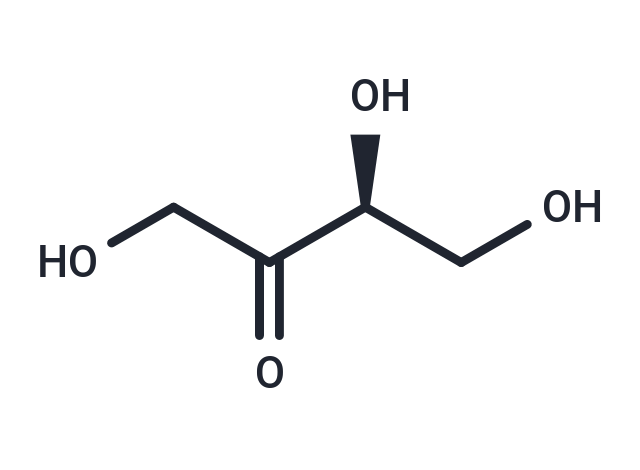
L-Erythrulose
CAS No. 533-50-6
L-Erythrulose( —— )
Catalog No. M37864 CAS No. 533-50-6
L-Erythrulose (L-glycero-Tetrulose) is a ketose extracted from sugar cane that has tanning and moisturizing effects and is often added to skin care products.
Purity : >98% (HPLC)
 COA
Datasheet
HNMR
HPLC
MSDS
Handing Instructions
COA
Datasheet
HNMR
HPLC
MSDS
Handing Instructions
| Size | Price / USD | Stock | Quantity |
| 2MG | 49 | In Stock |


|
| 5MG | 67 | In Stock |
|
| 10MG | 93 | In Stock |
|
| 25MG | 155 | In Stock |
|
| 50MG | 233 | In Stock |
|
| 100MG | 338 | In Stock |
|
| 500MG | 808 | In Stock |
|
| 1G | Get Quote | In Stock |
|
Biological Information
-
Product NameL-Erythrulose
-
NoteResearch use only, not for human use.
-
Brief DescriptionL-Erythrulose (L-glycero-Tetrulose) is a ketose extracted from sugar cane that has tanning and moisturizing effects and is often added to skin care products.
-
DescriptionL-Erythrulose (L-glycero-Tetrulose) is a ketose extracted from sugar cane that has tanning and moisturizing effects and is often added to skin care products.
-
In Vitro——
-
In Vivo——
-
Synonyms——
-
PathwayOthers
-
TargetOther Targets
-
RecptorOthers
-
Research Area——
-
Indication——
Chemical Information
-
CAS Number533-50-6
-
Formula Weight120.1
-
Molecular FormulaC4H8O4
-
Purity>98% (HPLC)
-
Solubility——
-
SMILES[C@@H](C(CO)=O)(CO)O
-
Chemical Name——
Shipping & Storage Information
-
Storage(-20℃)
-
ShippingWith Ice Pack
-
Stability≥ 2 years
Reference
molnova catalog



related products
-
Ladanein
Ladanein is a phytochemicals inhibitor that is known to disrupt the interactions of core and other hepatitis C virus (HCV) proteins.Ladanein possesses free radicals DPPH and ABTS +.scavenging activity, it also displays moderate (20-40 microM) activities against K562, K562R (imatinib-resistant), and 697 human leukemia cell lines.
-
(25S)-12β-Hydroxyspi...
(25S)-12β-Hydroxyspirost-4-en-3-one is a natural compound that can be isolated from Dioscorea chiupasensis.
-
N-Formylglycine
N-Formylglycine is a simple dipeptide and a post-translationally generated residue with unique catalytic capabilities and biotechnology applications.
