


 Cart
Cart
 sales@molnova.com



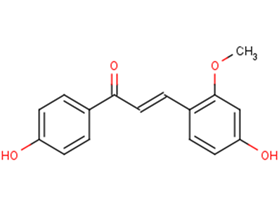
Echinatin
CAS No. 34221-41-5
Echinatin( Echinatin | Retrochalcone )
Catalog No. M18446 CAS No. 34221-41-5
Echinatin disturb the mitochondrial energy transfer reactions and membrane permeability, at a low concentration cause deterioration of respiratory control and oxidative phosphorylation of isolated rat liver mitochondria.
Purity : >98% (HPLC)
 COA
Datasheet
HNMR
HPLC
MSDS
Handing Instructions
COA
Datasheet
HNMR
HPLC
MSDS
Handing Instructions
| Size | Price / USD | Stock | Quantity |
| 10MG | 108 | In Stock |


|
| 100MG | Get Quote | In Stock |
|
| 200MG | Get Quote | In Stock |
|
| 500MG | Get Quote | In Stock |
|
| 1G | Get Quote | In Stock |
|
Biological Information
-
Product NameEchinatin
-
NoteResearch use only, not for human use.
-
Brief DescriptionEchinatin disturb the mitochondrial energy transfer reactions and membrane permeability, at a low concentration cause deterioration of respiratory control and oxidative phosphorylation of isolated rat liver mitochondria.
-
DescriptionEchinatin disturb the mitochondrial energy transfer reactions and membrane permeability, at a low concentration cause deterioration of respiratory control and oxidative phosphorylation of isolated rat liver mitochondria, inhibits DNP-ATPase activity while stimulating range latent ATPase activity. Echinatin has significant antioxidant activities, it shows strong scavenging activity toward the ABTS + radical, it also dose-dependently inhibits LPS induced reactive oxygen species (ROS) production in RAW 264.7 cells and inhibits the production of nitric oxide (NO), interleukin-6 (IL-6) and prostaglandin E2 (PGE2) in LPS-induced macrophage cells.
-
In VitroWestern Blot Analysis Cell Line:LPS-primed BMDMs Concentration:0-40 μM Incubation Time:60 min Result:Reduced cleaved caspase-1 and production of IL-1β.Immunofluorescence Cell Line:KYSE30 and KYSE270 cells Concentration:40 μM Incubation Time:2 days Result:Induced cellular LC3 puncta accumulation.
-
In VivoAnimal Model:LPS-induced septic shock in miceDosage:20 and 40 mg/kg Administration:i.p.Result:Inhibited LPS-induced IL-1β and TNF-α production.Reduced the proportion and the number of neutrophils in peritoneal lavage cells from mice.
-
SynonymsEchinatin | Retrochalcone
-
PathwayOthers
-
TargetOther Targets
-
RecptorFree radical scavengers
-
Research AreaOthers-Field
-
Indication——
Chemical Information
-
CAS Number34221-41-5
-
Formula Weight270.28
-
Molecular FormulaC16H14O4
-
Purity>98% (HPLC)
-
SolubilityIn Vitro:?DMSO : 125 mg/mL (462.48 mM)
-
SMILESCOc2cc(O)ccc2/C=C/C(=O)c1ccc(O)cc1
-
Chemical Name(E)-3-(4-hydroxy-2-methoxyphenyl)-1-(4-hydroxyphenyl)prop-2-en-1-one
Shipping & Storage Information
-
Storage(-20℃)
-
ShippingWith Ice Pack
-
Stability≥ 2 years
Reference
1. Inoue B, et al. The effects of echinatin and its related compounds on the mitochondrial energy transfer reaction.[J]. Journal of Toxicological Sciences, 1982, 7(4):245.
molnova catalog



related products
-
PF-06446846 hydrochl...
PF-06446846 hydrochloride, an orally active and highly selective inhibitor, targets Proprotein Convertase Subtilisin/Kexin type 9 (PCSK9) translation by inducing ribosomal stalling at approximately codon 34, effectively suppressing PCSK9 expression.
-
YM-750
YM-750 is a potent acyl-CoA:cholesterol acyltransferase (ACAT) inhibitor (IC50=0.18 μM). ACAT catalyzes the formation of cholesteryl esters from cholesterol and long-chain fatty-acyl-coenzyme A.
-
Triacetonamine hydro...
Triacetonamine hydrochloride is a natural product for research related to life sciences.
