


 Cart
Cart
 sales@molnova.com



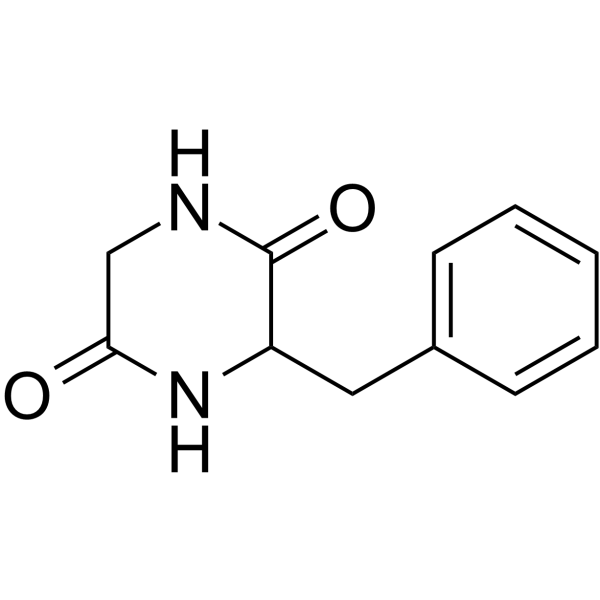
Cyclo(Phe-Gly)
CAS No. 5037-75-2
Cyclo(Phe-Gly)( —— )
Catalog No. M31141 CAS No. 5037-75-2
Cyclo(Phe-Gly) shows weak antagonistic activity against VEGFR2 -CD, it also shows strong inhibitory activity against human cancer cells(KB,KBv200) with LD50 at 6.5 and 11.2 umol/L,respectively.
Purity : >98% (HPLC)
 COA
Datasheet
HNMR
HPLC
MSDS
Handing Instructions
COA
Datasheet
HNMR
HPLC
MSDS
Handing Instructions
| Size | Price / USD | Stock | Quantity |
| 10MG | 657 | In Stock |


|
| 50MG | Get Quote | In Stock |
|
| 100MG | Get Quote | In Stock |
|
Biological Information
-
Product NameCyclo(Phe-Gly)
-
NoteResearch use only, not for human use.
-
Brief DescriptionCyclo(Phe-Gly) shows weak antagonistic activity against VEGFR2 -CD, it also shows strong inhibitory activity against human cancer cells(KB,KBv200) with LD50 at 6.5 and 11.2 umol/L,respectively.
-
DescriptionCyclo(Phe-Gly) shows weak antagonistic activity against VEGFR2 -CD, it also shows strong inhibitory activity against human cancer cells(KB,KBv200) with LD50 at 6.5 and 11.2 umol/L,respectively.
-
In Vitro——
-
In Vivo——
-
Synonyms——
-
PathwayOthers
-
TargetOther Targets
-
Recptor——
-
Research Area——
-
Indication——
Chemical Information
-
CAS Number5037-75-2
-
Formula Weight204.23
-
Molecular FormulaC11H12N2O2
-
Purity>98% (HPLC)
-
Solubility——
-
SMILES——
-
Chemical Name——
Shipping & Storage Information
-
Storage(-20℃)
-
ShippingWith Ice Pack
-
Stability≥ 2 years
Reference
molnova catalog



related products
-
CTPI-2
CTPI-2 is an inhibitor of mitochondrial citrate carrier SLC25A1 with(KD : 3.5 μM).?CTPI-2 inhibits glycolysis, PPARγ, and its downstream target the glucose transporter GLUT4.?
-
Picumast
Picumast shows antiallergic activity and can be utilized in the treatment of asthma. Picumast may be used in the treatment of therapeutic allergic airway diseases.
-
Tidutamab
Tidutamab (XmAb-18087) is a humanized bispecific antibody targeting the growth inhibitory receptor 2 (SSTR2) and T-cell binding domain (CD3) with antitumor activity for the study of gastric neurosecretory tumors.
