


 Cart
Cart
 sales@molnova.com



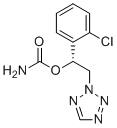
Cenobamate
CAS No. 913088-80-9
Cenobamate( YKP-3089 | YKP3089 )
Catalog No. M16559 CAS No. 913088-80-9
Cenobamate (YKP-3089, YKP3089) is a potential anti-seizure agent with currently unknown mechanisms of action.
Purity : >98% (HPLC)
 COA
Datasheet
HNMR
HPLC
MSDS
Handing Instructions
COA
Datasheet
HNMR
HPLC
MSDS
Handing Instructions
| Size | Price / USD | Stock | Quantity |
| 100MG | Get Quote | Get Quote |


|
| 200MG | Get Quote | Get Quote |
|
| 500MG | Get Quote | Get Quote |
|
| 1G | Get Quote | Get Quote |
|
Biological Information
-
Product NameCenobamate
-
NoteResearch use only, not for human use.
-
Brief DescriptionCenobamate (YKP-3089, YKP3089) is a potential anti-seizure agent with currently unknown mechanisms of action.
-
DescriptionCenobamate (YKP-3089, YKP3089) is a potential anti-seizure agent with currently unknown mechanisms of action.Epilepsy Phase 3 Clinical.
-
In Vitro——
-
In Vivo——
-
SynonymsYKP-3089 | YKP3089
-
PathwayOthers
-
TargetOther Targets
-
RecptorOther Targets
-
Research AreaNeurological Disease
-
IndicationEpilepsy
Chemical Information
-
CAS Number913088-80-9
-
Formula Weight267.67
-
Molecular FormulaC10H10ClN5O2
-
Purity>98% (HPLC)
-
Solubility——
-
SMILESNC(O[C@H](C1=CC=CC=C1Cl)CN2N=CN=N2)=O
-
Chemical Name(R)-1-(2-chlorophenyl)-2-(2H-tetrazol-2-yl)ethyl carbamate
Shipping & Storage Information
-
Storage(-20℃)
-
ShippingWith Ice Pack
-
Stability≥ 2 years
Reference
1. Zaccara G, et al. Pharmacol Res. 2016 Feb;104:38-48.
molnova catalog



related products
-
N-Sulfo-glucosamine ...
N-Sulfo-glucosamine sodium salt is possible to effect reaction at arthritis.
-
Galanin (1-16), mous...
Galanin(1-16),mouse,porcine,rat(TFA) is a Galanin receptor agonist with a Kd value of 3nM.
-
C-Reactive Protein (...
CRP, an acute phase serum protein synthesized in response to inflammatory cytokines, produces antitumor effects in animals. The fragment CRP (174-185) (RS-83277) shows similar activity by significantly enhancing the tumoricidal activity of human monocytes and alveolar macrophages in vitro.
