


 Cart
Cart
 sales@molnova.com



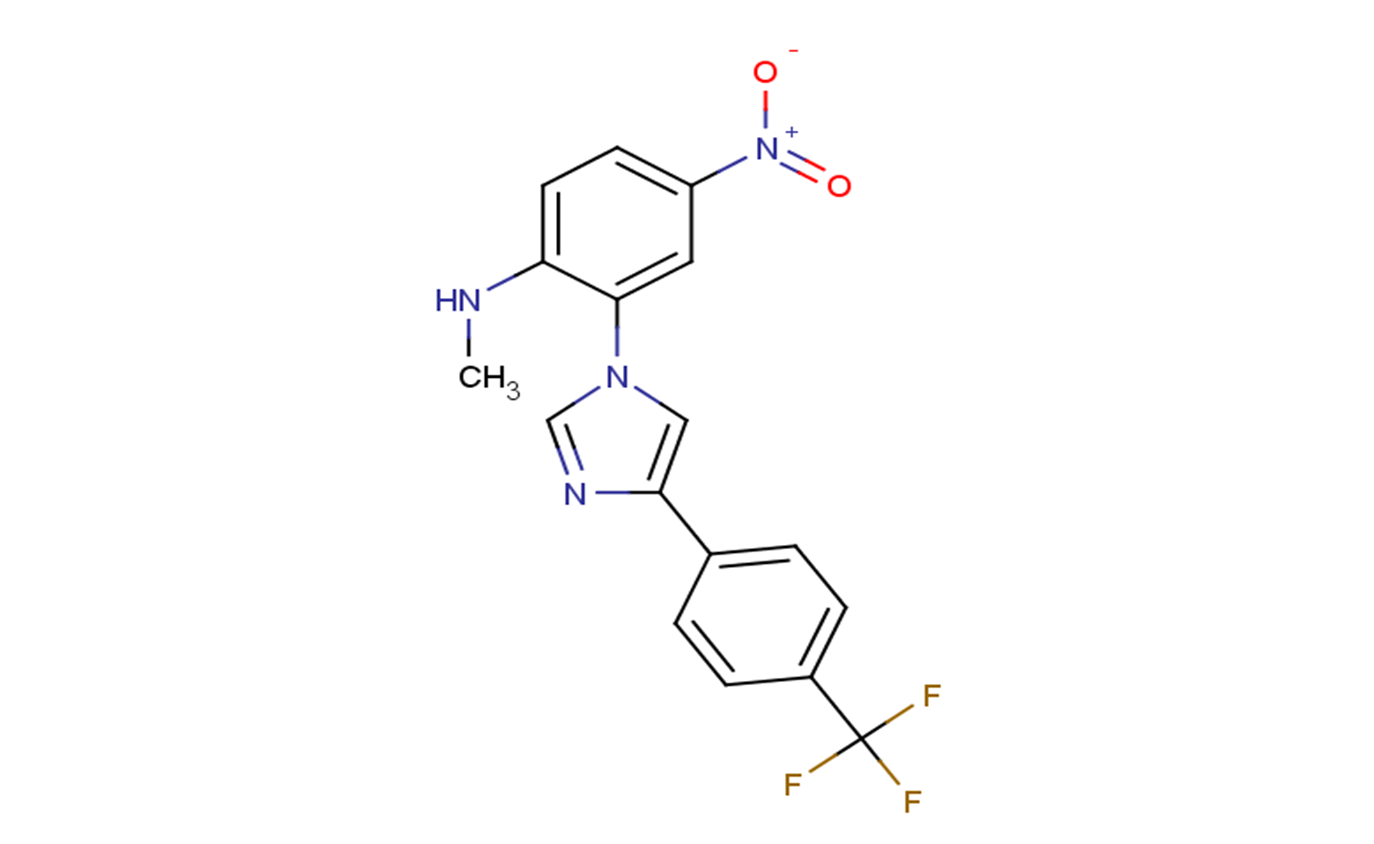
CU-T12-9
CAS No. 1821387-73-8
CU-T12-9( —— )
Catalog No. M22839 CAS No. 1821387-73-8
CU-T12-9 is a potent TLR1/2 agonist(EC50 of 52.9 nM in HEK-Blue hTLR2 SEAP assay).?It acts by activating the NFkB pathway, upregulating proinflammatory cytokines, and enhancing TLR1 and TLR2 dimerization.CU-T12-9 activates both the innate and the adaptive immune systems.
Purity : >98% (HPLC)
 COA
Datasheet
HNMR
HPLC
MSDS
Handing Instructions
COA
Datasheet
HNMR
HPLC
MSDS
Handing Instructions
| Size | Price / USD | Stock | Quantity |
| 2MG | 138 | In Stock |


|
| 5MG | 205 | In Stock |
|
| 10MG | 267 | In Stock |
|
| 25MG | 338 | In Stock |
|
| 50MG | 410 | In Stock |
|
| 100MG | 591 | In Stock |
|
| 500MG | 1224 | In Stock |
|
| 1G | Get Quote | In Stock |
|
Biological Information
-
Product NameCU-T12-9
-
NoteResearch use only, not for human use.
-
Brief DescriptionCU-T12-9 is a potent TLR1/2 agonist(EC50 of 52.9 nM in HEK-Blue hTLR2 SEAP assay).?It acts by activating the NFkB pathway, upregulating proinflammatory cytokines, and enhancing TLR1 and TLR2 dimerization.CU-T12-9 activates both the innate and the adaptive immune systems.
-
DescriptionCU-T12-9 is a potent TLR1/2 agonist(EC50 of 52.9 nM in HEK-Blue hTLR2 SEAP assay).?It acts by activating the NFkB pathway, upregulating proinflammatory cytokines, and enhancing TLR1 and TLR2 dimerization.CU-T12-9 activates both the innate and the adaptive immune systems. CU-T12-9 selectively activates the TLR1/2 heterodimer, not TLR2/6. CU-T12-9 signals through NF-κB and invokes an elevation of the downstream effectors TNF-α, IL-10, and iNOS.CU-T12-9 directly targets TLR1/2 to initiate downstream signaling.?CU-T12-9 specifically induces TLR1/2 activation, which can be blocked by either the anti-hTLR1 or the anti-hTLR2 antibody, but not the anti-hTLR6 antibody.?By binding to both TLR1 and TLR2, CU-T12-9 facilitates the TLR1/2 heterodimeric complex formation, which in turn activates the downstream signaling.?Fluorescence anisotropy assays revealed competitive binding to the TLR1/2 complex between CU-T12-9 and Pam3CSK4 with a half-maximal inhibitory concentration (IC50) of 54.4 nM.?CU-T12-9 signals through nuclear factor κB (NF-κB) and invokes an elevation of the downstream effectors tumor necrosis factor-α (TNF-α), interleukin-10 (IL-10), and inducible nitric oxide synthase (iNOS).?
-
In VitroCU-T12-9 directly targets TLR1/2 to initiate downstream signaling. By binding to both TLR1 and TLR2, CU-T12-9 facilitates the TLR1/2 heterodimeric complex formation, which in turn activates the downstream signaling. CU-T12-9 activates the TLR1/2 pathway by inducing NF-κB activation to trigger downstream signaling, such as secreted embryonic alkaline phosphatase (SEAP), NO, and TNF-α.CU-T12-9 (0.39-100 μM; 24 hours) does not produce toxicity up to 100 μM in HEK-Blue hTLR2 and Raw 264.7 cells. CU-T12-9 up-regulates the mRNA levels of TLR1, TLR2, TNF, IL-10, and iNOS. CU-T12-9 (0.1-10 μM) activates TLR1 mRNA and iNOS mRNA after Raw 264.7 cells are treated for 24 hours. CU-T12-9 (0.1-10 μM) activates TLR2 and IL-10 mRNA after Raw 264.7 cells are treated for 2 hours. CU-T12-9 (0.1-10 μM) activates TNF mRNA after Raw 264.7 cells are treated for 8 hours.Cell Cytotoxicity Assay Cell Line:HEK-Blue hTLR2 and Raw 264.7 macrophage cells Concentration:0.39, 0.78, 1.56, 3.125, 6.25, 12.5, 25, 50, and 100 μM Incubation Time:24 hours Result:No toxicity was seen up to 100 μM.RT-PCR Cell Line:Raw 264.7 cells Concentration:0.1, 1, 10 μM Incubation Time:24 hours for TLR1 and iNOS mRNA assay2 hours for TLR2 and IL-10 mRNA assay8 hours for TNF mRNA assay Result:Triggered TLR1 mRNA and iNOS mRNA at 24 hours dose-dependently.
-
In Vivo——
-
Synonyms——
-
PathwayImmunology/Inflammation
-
TargetTLR
-
RecptorTLR2|TLR1
-
Research Area——
-
Indication——
Chemical Information
-
CAS Number1821387-73-8
-
Formula Weight362.31
-
Molecular FormulaC17H13F3N4O2
-
Purity>98% (HPLC)
-
SolubilityDMSO:250 mg/mL (690.02 mM; Need ultrasonic)
-
SMILESCNC1=CC=C(C=C1N2C=C(N=C2)C3=CC=C(C=C3)C(F)(F)F)[N+]([O-])=O
-
Chemical Name——
Shipping & Storage Information
-
Storage(-20℃)
-
ShippingWith Ice Pack
-
Stability≥ 2 years
Reference
1. Cheng K, et al. Specific activation of the TLR1-TLR2 heterodimer by small-molecule agonists. Sci Adv. 2015;1(3). pii: e1400139.
molnova catalog



related products
-
Polyinosinic-polycyt...
Polyinosinic-polycytidylic acid sodium is a synthetic analog of double-stranded RNA and an agonist of toll-like receptor 3 (TLR3) and retinoic acid inducible gene I (RIG-I)-like receptors (RIG-I and MDA5).
-
(+)-Isocorydine hydr...
(+)-Isocorydine is a eukaryote protein kinases Inhibitor.
-
CU-CPT17e
CU-CPT17e is a potent agonist of TLR(TLR3, TLR8, and TLR9).
