


 Cart
Cart
 sales@molnova.com



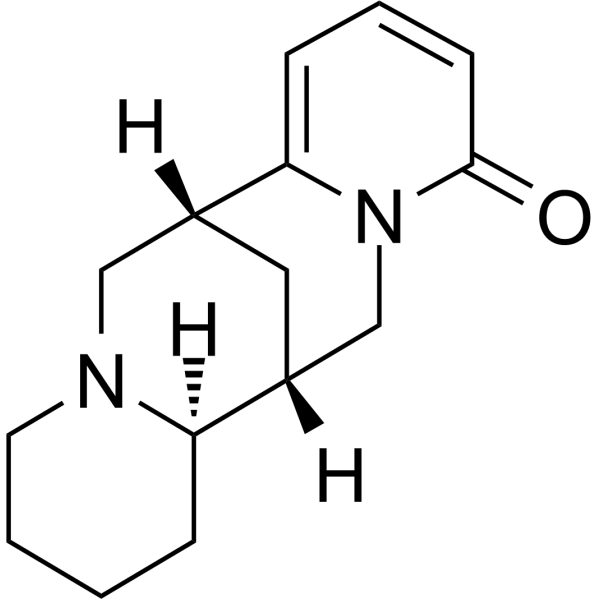
Anagyrine
CAS No. 486-89-5
Anagyrine( —— )
Catalog No. M31197 CAS No. 486-89-5
Anagyrine, is the responsible teratogen from teratogenic lupins, can produce congenital deformities in calves typical of crooked calf disease.
Purity : >98% (HPLC)
 COA
Datasheet
HNMR
HPLC
MSDS
Handing Instructions
COA
Datasheet
HNMR
HPLC
MSDS
Handing Instructions
| Size | Price / USD | Stock | Quantity |
| 5MG | 304 | In Stock |


|
| 50MG | Get Quote | In Stock |
|
| 100MG | Get Quote | In Stock |
|
Biological Information
-
Product NameAnagyrine
-
NoteResearch use only, not for human use.
-
Brief DescriptionAnagyrine, is the responsible teratogen from teratogenic lupins, can produce congenital deformities in calves typical of crooked calf disease.
-
DescriptionAnagyrine, is the responsible teratogen from teratogenic lupins, can produce congenital deformities in calves typical of crooked calf disease; it also can induce red cell aplasia, vascular anomaly, and skeletal dysplasia.(-)-Anagyrine and (-)--Methylcytisine have nematicidal activities against Pine Wood Nematodes.
-
In Vitro——
-
In Vivo——
-
Synonyms——
-
PathwayOthers
-
TargetOther Targets
-
Recptor——
-
Research Area——
-
Indication——
Chemical Information
-
CAS Number486-89-5
-
Formula Weight244.3
-
Molecular FormulaC15H20N2O
-
Purity>98% (HPLC)
-
SolubilityIn Vitro:?H2O : 25 mg/mL (102.32 mM)
-
SMILES——
-
Chemical Name——
Shipping & Storage Information
-
Storage(-20℃)
-
ShippingWith Ice Pack
-
Stability≥ 2 years
Reference
molnova catalog



related products
-
4-Methoxycinnamaldeh...
4-Methoxycinnamaldehyde is an active ingredient of Agastache rugosa.4-Methoxycinnamaldehyde has cytoprotective activity against respiratory syncytial virus (RSV) in human laryngeal carcinoma cell lines, and helps to control disease induced by RSV infection, with an IC50 of approximately 0.055 μg/mL. The IC50 was about 0.055 μg/mL.
-
LM10
Selective tryptophan 2, 3-dioxygenase (TDO) inhibitor (IC50 values are 0.62 and 2 μM for human and mouse TDO, respectively).
-
Senecivernine N-oxid...
The herbs of Senecio inaequidens D.C
