


 Cart
Cart
 sales@molnova.com



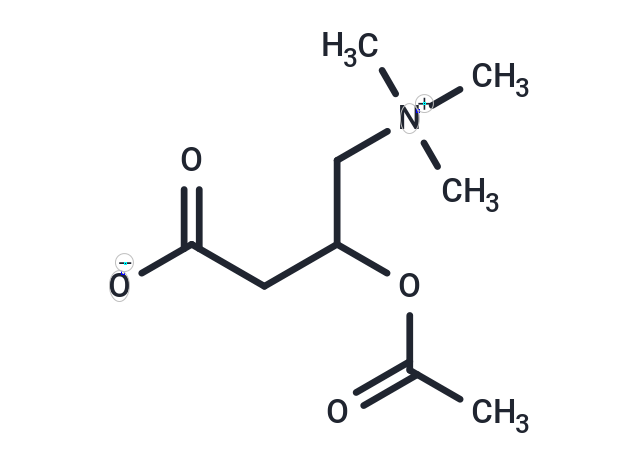
Acetyl-L-carnitine
CAS No. 3040-38-8
Acetyl-L-carnitine( —— )
Catalog No. M34154 CAS No. 3040-38-8
Acetyl-L-carnitine(RO 447190) is an amino acid that crosses the blood-brain barrier and is often used as a dietary supplement for neuroinflammation.
Purity : >98% (HPLC)
 COA
Datasheet
HNMR
HPLC
MSDS
Handing Instructions
COA
Datasheet
HNMR
HPLC
MSDS
Handing Instructions
| Size | Price / USD | Stock | Quantity |
| 2MG | 392 | Get Quote |


|
| 5MG | 610 | Get Quote |
|
| 10MG | 867 | Get Quote |
|
| 25MG | 1260 | Get Quote |
|
| 50MG | 1702 | Get Quote |
|
| 100MG | 2250 | Get Quote |
|
| 500MG | 4410 | Get Quote |
|
| 1G | Get Quote | Get Quote |
|
Biological Information
-
Product NameAcetyl-L-carnitine
-
NoteResearch use only, not for human use.
-
Brief DescriptionAcetyl-L-carnitine(RO 447190) is an amino acid that crosses the blood-brain barrier and is often used as a dietary supplement for neuroinflammation.
-
DescriptionAcetyl-L-carnitine(RO 447190) is an amino acid that crosses the blood-brain barrier and is often used as a dietary supplement for neuroinflammation.Acetyl-L-carnitine is neuroprotective and can be used in the study of neurological disorders like Alzheimer's disease.
-
In Vitro——
-
In Vivo——
-
Synonyms——
-
PathwayProteasome/Ubiquitin
-
TargetEndogenous Metabolite
-
RecptorEndogenous Metabolite
-
Research Area——
-
Indication——
Chemical Information
-
CAS Number3040-38-8
-
Formula Weight203.24
-
Molecular FormulaC9H17NO4
-
Purity>98% (HPLC)
-
Solubility——
-
SMILESCC(=O)OC(CC([O-])=O)C[N+](C)(C)C
-
Chemical Name——
Shipping & Storage Information
-
Storage(-20℃)
-
ShippingWith Ice Pack
-
Stability≥ 2 years
Reference
molnova catalog



related products
-
D-Ribonolactone
D-Ribonolactone is sugar lactone and an inhibitor of β-galactosidase of Escherichia coli (Ki : 26 Mm).
-
Aniline
Aniline has been reported to be toxic to the spleen via iron overload and induction of oxidative stress via Heme Oxygenase 1 up-regulation.
-
Nα-Acetyl-L-lysine
N-Alpha-acetyllysine is a N-acetylated amino acid. It is a normal constituent of human urine with concentrations in normal samples too small to allow its routine detection; however it has been found at increased levels in the urine of a patient with aminoacylase I deficiency.
