


 Cart
Cart
 sales@molnova.com



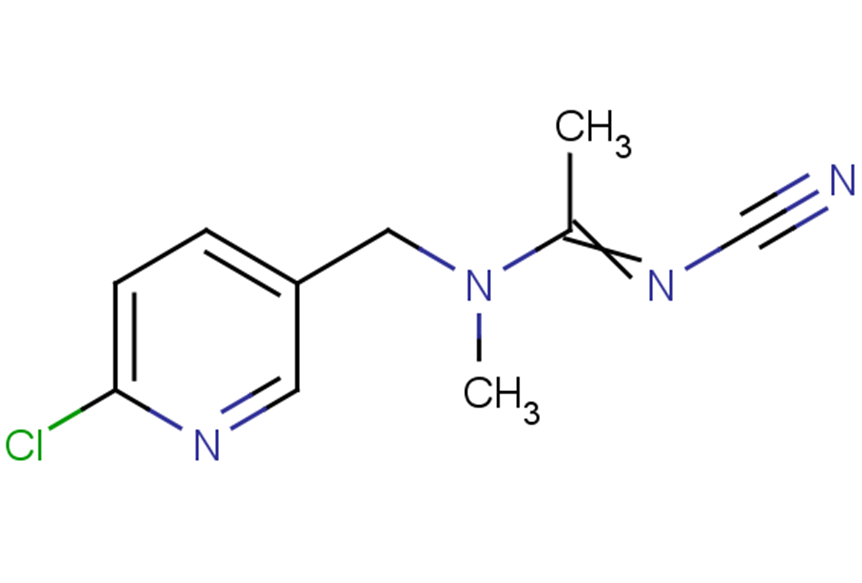
Acetamiprid
CAS No. 135410-20-7
Acetamiprid( —— )
Catalog No. M22564 CAS No. 135410-20-7
Acetamiprid is a nicotinic acetylcholine receptor (nAChR) agonist. Acetamiprid is a neonicotinoid insecticide used worldwide. It is shown to be associated with neuromuscular and reproductive disorders. Acetamiprid decreases in body weight and mildly affected spermatogenesis.
Purity : >98% (HPLC)
 COA
Datasheet
HNMR
HPLC
MSDS
Handing Instructions
COA
Datasheet
HNMR
HPLC
MSDS
Handing Instructions
| Size | Price / USD | Stock | Quantity |
| 50MG | 37 | In Stock |


|
| 100MG | 53 | In Stock |
|
| 500MG | 129 | In Stock |
|
| 1G | Get Quote | In Stock |
|
Biological Information
-
Product NameAcetamiprid
-
NoteResearch use only, not for human use.
-
Brief DescriptionAcetamiprid is a nicotinic acetylcholine receptor (nAChR) agonist. Acetamiprid is a neonicotinoid insecticide used worldwide. It is shown to be associated with neuromuscular and reproductive disorders. Acetamiprid decreases in body weight and mildly affected spermatogenesis.
-
DescriptionAcetamiprid is a nicotinic acetylcholine receptor (nAChR) agonist. Acetamiprid is a neonicotinoid insecticide used worldwide. It is shown to be associated with neuromuscular and reproductive disorders. Acetamiprid decreases in body weight and mildly affected spermatogenesis. Acetamiprid disrupts subsequent testosterone biosynthesis by decreasing the rate of conversion of cholesterol to testosterone and by preventing cholesterol from entering the mitochondria within the Leydig cells. These effects caused reproductive damage to the rats. Acetamiprid decreases the expression of testosterone-metabolism genes, nAChR subunit genes, and proliferation-associated genes in mice.
-
In Vitro——
-
In VivoAcetamiprid decreases in body weight and mildly affected spermatogenesis. Acetamiprid decreases the expression of testosterone-metabolism genes, nAChR subunit genes, and proliferation-associated genes in mice.Acetamiprid disrupts subsequent testosterone biosynthesis by decreasing the rate of conversion of cholesterol to testosterone and by preventing cholesterol from entering the mitochondria within the Leydig cells. These effects caused reproductive damage to the rats. Animal Model:Male Sprague Dawley (SD) ratsDosage:10 mg/kg, 30 mg/kg Administration:Oral gavage; daily; for 35 days Result:Inhibited testosterone synthesis by affecting the mitochondrial function and cytoplasmic adenosine triphosphate production in rat Leydig cells.
-
Synonyms——
-
PathwayEndocrinology/Hormones
-
TargetAChR
-
RecptornAChR
-
Research Area——
-
Indication——
Chemical Information
-
CAS Number135410-20-7
-
Formula Weight222.67
-
Molecular FormulaC10H11ClN4
-
Purity>98% (HPLC)
-
SolubilityDMSO:97 mg/mL (435.62mM)
-
SMILESCN(Cc1ccc(Cl)nc1)C(C)=NC#N
-
Chemical Name——
Shipping & Storage Information
-
Storage(-20℃)
-
ShippingWith Ice Pack
-
Stability≥ 2 years
Reference
1. Terayama H, et al. Effect of acetamiprid on the immature murine testes. Int J Environ Health Res. 2018 Dec;28(6):683-696.
molnova catalog



related products
-
Tropicamide
Tropicamide is an anticholinergic and a Muscarinic Receptor subtype M4-preferring antagonist .
-
NECA
NECA is an agonist of Adenosine receptor increases cerebral extravasation of fluorescein and low molecular weight dextran independent of blood-brain barrier modulation.
-
LY 334370
LY334370 is a selective 5-HT1F receptor agonist with a Ki of 1.6 nM.
