


 Cart
Cart
 sales@molnova.com



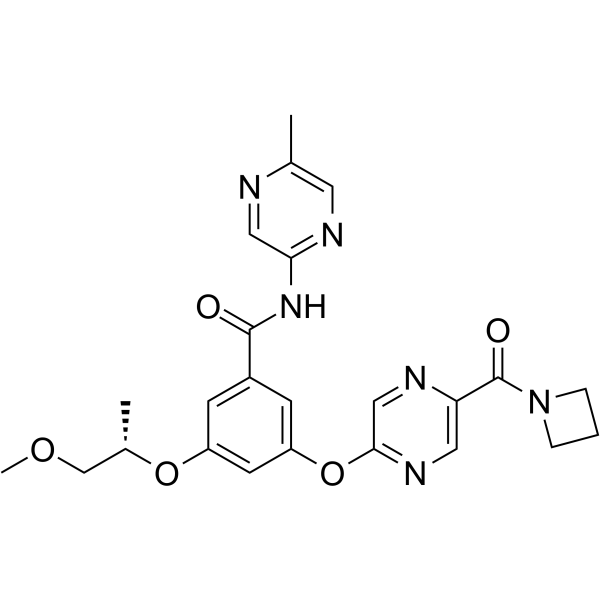
AZD-1656
CAS No. 919783-22-5
AZD-1656( AZD1656 | AZD 1656 )
Catalog No. M27854 CAS No. 919783-22-5
AZD-1656 is a glucokinase activator (GKA) that can cause dose-limiting hypoglycemia in normal animals used in embryofetal development studies and type 2 diabetes.
Purity : >98% (HPLC)
 COA
Datasheet
HNMR
HPLC
MSDS
Handing Instructions
COA
Datasheet
HNMR
HPLC
MSDS
Handing Instructions
| Size | Price / USD | Stock | Quantity |
| 5MG | 260 | Get Quote |


|
| 10MG | 416 | Get Quote |
|
| 25MG | 714 | Get Quote |
|
| 50MG | 972 | Get Quote |
|
| 100MG | Get Quote | Get Quote |
|
| 200MG | Get Quote | Get Quote |
|
| 500MG | Get Quote | Get Quote |
|
| 1G | Get Quote | Get Quote |
|
Biological Information
-
Product NameAZD-1656
-
NoteResearch use only, not for human use.
-
Brief DescriptionAZD-1656 is a glucokinase activator (GKA) that can cause dose-limiting hypoglycemia in normal animals used in embryofetal development studies and type 2 diabetes.
-
DescriptionAZD-1656 is a glucokinase activator (GKA) that can cause dose-limiting hypoglycemia in normal animals used in embryofetal development studies and type 2 diabetes.(In Vivo):The gkdel/wt mouse was used as an alternative rodent strain for embryofetal development studies with AZD-1656. Heterozygous global knockout gkdel/wt females were dosed with 20, 50, or 130 mg/kg/day of AZD-1656 or vehicle for a minimum of 14 consecutive days before mating with wild-type males and throughout organogenesis. Maternal effects were confined to slightly reduced food consumption, reduced body weight gain, and the pharmacologic effect of decreased plasma glucose. Fetuses were genotyped. Fetal weights at the high dose were slightly reduced but there was no effect on fetal survival. There were two specificmajormalformations, omphalocele and right-sided aortic arch, with increased fetal incidence in mid- and high-dose fetuses (e.g., omphalocele fetal incidence of 0.6, 0.7, 4.6, and 2% across the dose groups) plus increased incidences of minor abnormalities and variants indicative of either delayed or disturbed development. Fetal weight and abnormalities were unaffected by fetal genotype. The fetal effects are considered hypoglycemia related. There was no effect on embryofetal survival in the gkdel/wt mouse at AZD-1656 exposures.
-
In Vitro——
-
In VivoAZD1656 (0-9 mg/kg; oral gavage; daily; for 8 weeks; C57BL/6 mice) treatment shows lowered blood glucose and glucose excursion and raised insulin. Liver mRNA levels for various ChREBP target genes including carbohydrate response element binding protein beta isoform (ChREBP-β), G6pc, Pklr, Acly, Acac and Gpd2 are increased by AZD1656. Animal Model:C57BL/6 mice Dosage:0 mg/kg, 2 mg/kg, 4.5 mg/kg, 9 mg/kg Administration:Oral gavage; daily; for 8 weeks Result:Administered 2 hours before the oral glucose tolerance test, lowered blood glucose and glucose excursion and raised insulin.
-
SynonymsAZD1656 | AZD 1656
-
PathwayCytoskeleton/Cell Adhesion Molecules
-
TargetGlucokinase
-
RecptorTRPA1
-
Research Area——
-
Indication——
Chemical Information
-
CAS Number919783-22-5
-
Formula Weight478.509
-
Molecular FormulaC24H26N6O5
-
Purity>98% (HPLC)
-
SolubilityIn Vitro:?DMSO : 250 mg/mL (522.47 mM)
-
SMILESCOC[C@H](C)Oc1cc(Oc2cnc(cn2)C(=O)N2CCC2)cc(c1)C(=O)Nc1cnc(C)cn1
-
Chemical Name——
Shipping & Storage Information
-
Storage(-20℃)
-
ShippingWith Ice Pack
-
Stability≥ 2 years
Reference
1.Matt Petrus, et al. A role of TRPA1 in mechanical hyperalgesia is revealed by pharmacological inhibition. Mol Pain. 2007;3:40. Published 2007 Dec 17.
molnova catalog



related products
-
TTP399
TTP399 (TTP-399) is a hepatoselective, oral Glucokinase (GK) activator with EC50 of 304 nM and 762 nM for human GK at high glucose concentration (15 mM) and normoglycemia (5 mM), respectively.
-
Piragliatin
Piragliatin (RO 4389620;R-1440) is an allosteric, potent Glucokinase (GK) activator with SC1.5 of 0.18 uM.
-
Ensartinib
Ensartinib (X-396) is an orally available small molecule inhibitor of the receptor tyrosine kinase anaplastic lymphoma kinase (ALK) with potential antineoplastic activity.
